Voyage et exploration
18 min de lecture
Vivre en Allemagne vous offre un avantage qu'un touriste n'a jamais : le temps. Vous n'êtes pas obligé de tout voir en dix jours ; vous pouvez donc voyager comme les Allemands : lentement, au fil des saisons, et avec la liberté de revenir. Ce chapitre traite de… où et la why Ce chapitre porte sur la découverte de l'Allemagne, et non sur les modalités d'achat d'un billet. Si vous souhaitez connaître les aspects pratiques des voyages économiques en train et en autocar, consultez le chapitre qui y est consacré. Conseils pour les voyages intérieurset les transports locaux quotidiens sont couverts par Système de transport publicL’objectif est ici de vous aider à décider où vous rendre une fois votre billet en poche, et à profiter au maximum de la position unique de l’Allemagne au cœur de l’Europe.
Considérez cela comme une invitation à aller au-delà des clichés. La plupart des nouveaux arrivants visitent Berlin, peut-être Munich pour l'Oktoberfest, et le Rhin lors d'une croisière fluviale, puis s'arrêtent là. L'Allemagne récompense celui qui poursuit son exploration : les falaises de craie d'une île de la Baltique, un village viticole méconnu des guides touristiques, une vallée brumeuse des montagnes de l'Est à l'aube. Découvrir son pays d'accueil est aussi un moyen discret d'intégration. On comprend bien mieux les Allemands après avoir foulé le sol des lieux où ils passent leurs vacances.
Vous vivez ici, alors allez au-delà de la carte postale.
Commencez par la montagne, car c'est ce qu'il y a de plus facile à aimer. Les Alpes bavaroises, à l'extrême sud, abritent le plus haut sommet d'Allemagne, la Zugspitze, accessible par train à crémaillère et téléphérique pour ceux qui ne souhaitent pas l'escalader, ainsi qu'une succession de lacs d'une clarté exceptionnelle, comme le Königssee près de Berchtesgaden, niché entre les falaises, et l'Eibsee au pied de la Zugspitze. C'est le pays de Wanderland, un paradis pour les randonneurs, avec des sentiers balisés pour tous les niveaux et des refuges de montagne où l'on sert du Kaiserschmarrn (une crêpe caramélisée et effilochée) à 1 800 mètres d'altitude. En hiver, la région se transforme en domaine skiable et en piste de luge. Le château de Neuschwanstein, qui a inspiré la silhouette emblématique de Disney, se dresse au pied des montagnes près de Füssen et mérite une visite, même si les villages environnants offrent des charmes plus paisibles.
La Forêt-Noire, au sud-ouest, offre un contraste saisissant : denses forêts d’épicéas sombres, vallées profondes et tradition artisanale de coucous et de gâteaux aux cerises. Fribourg-en-Brisgau, ville étudiante et ensoleillée, en est la porte d’entrée ; Triberg abrite les plus hautes cascades du pays ; et toute la région est imprégnée de culture thermale, des grands thermes de Baden-Baden aux modestes thermes de village où l’on se prélasse dans une eau minérale chaude tandis qu’il neige dehors. Plus à l’est, le Jura souabe, plateau calcaire parsemé de grottes, de châteaux et d’escarpements spectaculaires, reste méconnu des étrangers, bien qu’il se situe entre Stuttgart et Munich.
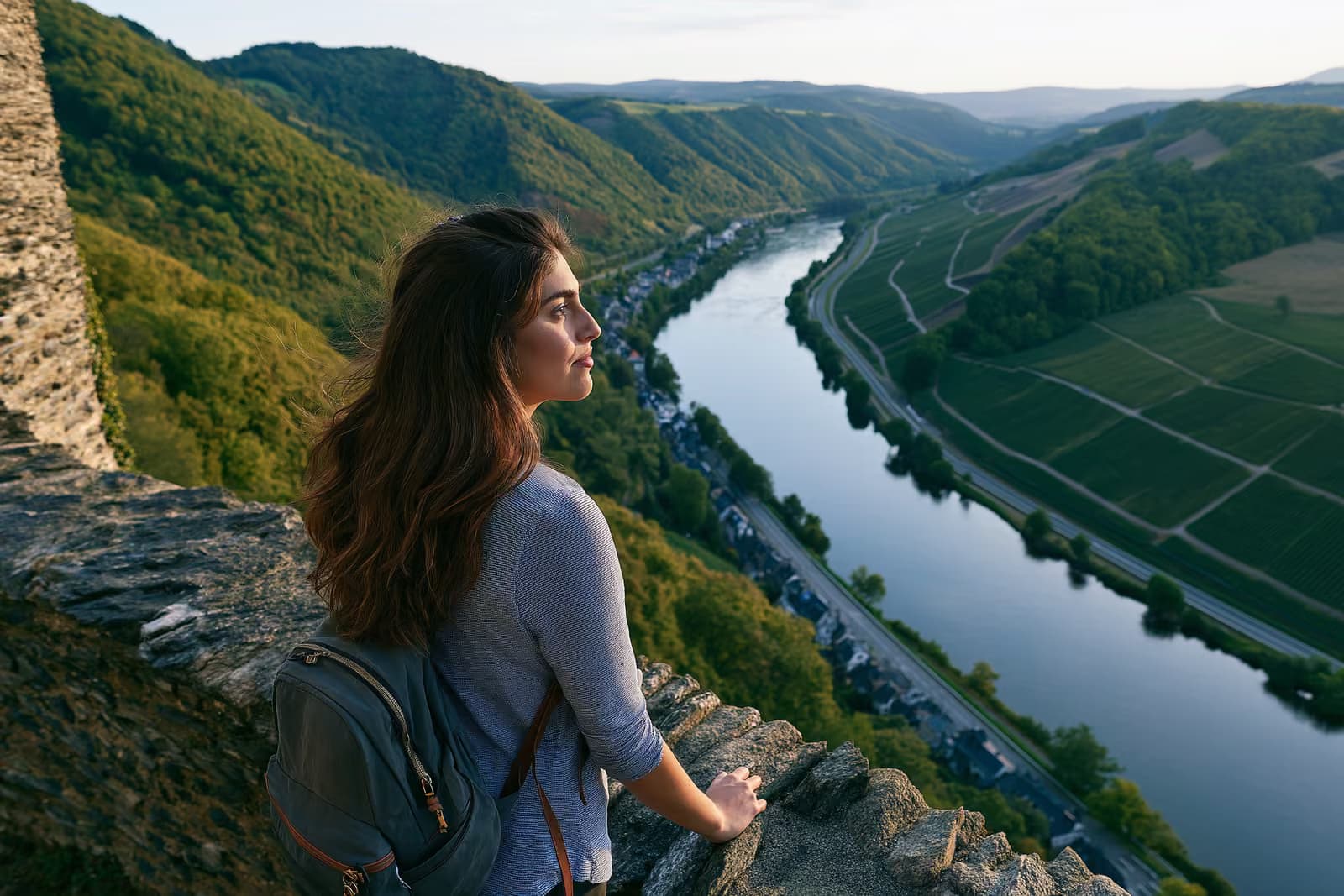
Les vallées viticoles allemandes forment un univers à part. Les gorges du Rhin, entre Rüdesheim et Coblence, classées au patrimoine mondial de l'UNESCO, offrent un panorama exceptionnel de châteaux perchés sur les falaises et de vignobles escarpés descendant jusqu'au fleuve. La Moselle voisine serpente à travers des collines d'ardoise réputées pour leur Riesling, et abrite des villages pittoresques comme Bernkastel-Kues et Cochem. Ici, le rythme de vie est paisible, idéal pour une balade à vélo, une traversée en ferry et un verre de vin local en terrasse. C'est aussi sur les rives du Rhin et de la Moselle que l'on découvre qu'un séjour en Allemagne peut se résumer presque entièrement à savourer de bons petits plats et à se promener pour digérer.
Puis viennent les côtes, qui surprennent presque tout le monde. L'Allemagne possède deux mers. La mer du Nord, la Nordsee, offre la Wattenmeer (mer des Wadden), un écosystème de marée classé au patrimoine mondial de l'UNESCO, où des promenades guidées sur les vasières (Wattwanderungen) permettent d'explorer les fonds marins à marée basse, ainsi que l'île chic et balayée par les vents de Sylt, avec ses dunes et ses toits de chaume. La mer Baltique, l'Ostsee, est plus douce et plus chaude : les falaises de craie blanche de Rügen au Königsstuhl, l'architecture grandiose des stations balnéaires conçues par Baederarchitektur, et de longues plages de sable fin avec le Strandkorb, ce transat en osier à capuche, véritable institution nationale. Les Allemands se rendent à l'Ostsee comme d'autres nations se rendent en Méditerranée, et après y avoir passé une semaine, on comprend une petite, mais réelle, facette de l'identité nationale.
L'est du pays offre certains des paysages les plus cinématographiques. La Suisse saxonne, en amont de Dresde le long de l'Elbe, est un paysage de tours de grès, de gorges profondes et du pont de la Bastei suspendu entre des pitons rocheux - un paradis pour les randonneurs et les alpinistes, à une heure d'une grande ville. Le Harz, au centre du pays, est une chaîne de montagnes basses aux forêts sombres, parsemée de villages à colombages et traversée par un chemin de fer à vapeur qui gravit le Brocken, sommet auréolé des légendes de la Nuit de Walpurgis. Le Spreewald, au sud-est de Berlin, est un labyrinthe de canaux où le courrier est encore parfois distribué en barque, et où la minorité sorabe perpétue sa langue et ses traditions pascales. La Franconie, au nord de la Bavière, est une région réputée pour sa culture brassicole, la ville médiévale de Bamberg et les falaises de la Suisse française. L'Eifel, près de la frontière belge, offre des lacs de cratère volcanique et une tranquillité absolue. Aucun de ces lieux n'est difficile d'accès, et ce sont tous des endroits que les Allemands eux-mêmes chérissent.
Enfin, les villes, chacune avec un caractère véritablement unique. Berlin est tentaculaire, inachevée et en perpétuelle réinvention, un lieu où l'histoire est omniprésente - le Mur, le dôme du Reichstag, l'Île aux Musées - et où la vie nocturne est trépidante, empreinte d'une créativité débridée et bon marché. Munich est prospère, traditionnelle et verdoyante, avec un esprit alpin, ses brasseries en plein air sous les châtaigniers et l'Englischer Garten en son cœur. Hambourg est une ville marchande maritime, sillonnée de canaux, avec le quartier des entrepôts de la Speicherstadt en briques rouges et l'emblématique salle de concert Elbphilharmonie. Cologne, Köln, vit autour de son imposante cathédrale gothique et de son carnaval exubérant. Leipzig et Dresde, à l'est, sont les piliers culturels de la Saxe - Dresde, reconstruite dans toute sa splendeur baroque le long de l'Elbe, Leipzig, plus jeune, moins chère et musicalement exigeante, est la ville de Bach. Choisissez-en quelques-unes, visitez-les plusieurs fois et laissez-les devenir des lieux familiers, au-delà des simples sites touristiques.
Le rythme du voyage allemand
En Allemagne, les congés (Urlaub) sont une véritable institution. En tant que salarié, vous en bénéficiez plus qu'ailleurs dans le monde, généralement entre 25 et 30 jours payés par an, auxquels s'ajoutent les jours fériés. La culture allemande encourage fortement l'utilisation de ces congés : considérés comme un droit, et non un luxe, vos collègues vous demanderont souvent vos projets plutôt que de savoir si vous en prenez. S'adapter au calendrier allemand est essentiel pour profiter pleinement de ses congés et voyager bien plus que ne le suggère leur nombre.
L'astuce principale réside dans le Brückentag, littéralement « jour de transition ». Les jours fériés allemands, les Feiertage, sont généralement fixés à des dates précises ou à des jours de la semaine spécifiques, et plusieurs d'entre eux tombent immanquablement un jeudi. Christi Himmelfahrt (l'Ascension) est toujours un jeudi, tout comme Fronleichnam (la Fête-Dieu, célébrée uniquement dans les Länder les plus catholiques). Lorsqu'un Feiertage tombe un jeudi, prendre un jour de congé le vendredi suivant permet de « compenser » le jour férié et de bénéficier de quatre jours de repos consécutifs pour le prix d'un seul. Le même principe s'applique en sens inverse pour un jour férié un mardi, où l'on compense avec le lundi. Comme une grande partie des jours fériés allemands se concentrent au printemps - Karfreitag et Ostermontag (Vendredi saint et Lundi de Pâques), Tag der Arbeit (Fête du Travail, 1er mai), Christi Himmelfahrt et Pfingstmontag (Lundi de Pentecôte) - la fin du printemps est la saison idéale pour jouer au bridge, et c'est à ce moment-là que les Allemands réservent discrètement leurs longs week-ends des mois à l'avance. Notez que les Feiertage (jours fériés) varient selon les Länder (États fédérés), les meilleurs jours pour jouer au bridge diffèrent donc entre la Bavière et Berlin, par exemple. Notre chapitre sur Jours fériés et coutumes les répertorie ; vérifiez les vôtres avant de planifier.
L'autre moitié du calendrier correspond aux vacances scolaires, et là, l'État allemand a mis en place un système ingénieux qui a un impact direct sur vos déplacements. Les six semaines environ de vacances d'été (Sommerferien) sont délibérément échelonnées entre les seize Länder, selon un calendrier tournant coordonné par la Kultusministerkonferenz, la conférence permanente des ministres de l'Éducation des Länder, afin d'éviter que toute l'Allemagne ne se rue simultanément sur les autoroutes. C'est pourquoi les vacances scolaires d'été peuvent commencer fin juin dans un Land et fin juillet dans un autre. Il en résulte un double avantage pour vous. Premièrement, les prix des vols et des hébergements grimpent en flèche pendant les vacances scolaires de chaque Land. Si vous n'avez pas d'enfants scolarisés, voyager en dehors des périodes de vacances scolaires les plus populaires vous permettra de faire de réelles économies. Deuxièmement, le début et la fin des vacances scolaires de chaque Land déclenchent une Reisewelle, un véritable afflux de familles sur les autoroutes, provoquant les fameux embouteillages du week-end. Les bulletins d'information routière annoncent régulièrement des embouteillages de plusieurs kilomètres sur les axes nord-sud le premier samedi des grandes vacances d'été. Connaître le calendrier des vacances permet d'éviter à la fois les pics de prix et les bouchons.
Au-delà des jours fériés fixes, l'Allemagne vit au rythme des saisons, un rythme qu'il est bon de découvrir. Le printemps et l'automne sont la saison des randonnées, lorsque les sentiers et les refuges de montagne sont animés et que le temps est des plus cléments. La fin de l'été et le début de l'automne sont marqués par les Volksfeste, les fêtes populaires, dont l'Oktoberfest de Munich (qui a généralement lieu en septembre) n'est que la plus célèbre. Presque chaque région a la sienne, de la Cannstatter Wasen de Stuttgart aux innombrables Kirchweih et Schützenfeste des villages. Les mois d'hiver laissent place aux Weihnachtsmärkte, les marchés de Noël, qui deviennent une raison de voyager à part entière dès la fin novembre. Comprendre ce rythme, c'est cesser de se demander « est-ce le bon moment pour voyager ? » et réaliser que chaque saison offre un type de voyage unique.
L'Allemagne au centre de l'Europe
L'Allemagne partage ses frontières avec neuf pays, plus que tout autre pays d'Europe, ce qui constitue un atout majeur. L'Autriche et les Alpes, la Suisse, la République tchèque (Prague étant à peine à plus de quatre heures de Dresde ou de Nuremberg), la Pologne, le Danemark, les Pays-Bas, la Belgique, la France et le Luxembourg sont tous accessibles pour un week-end. Certaines destinations sont étonnamment proches : Strasbourg, en France, est à quelques minutes en train de la Forêt-Noire ; les villes néerlandaises et belges se situent juste après Aix-la-Chapelle et Cologne ; et Copenhague est à un trajet direct en train depuis Hambourg. Une grande partie de l'Europe est accessible en train régional, en autocar FlixBus ou par un court vol low-cost. Les aéroports régionaux tels que Weeze, Memmingen, Hahn et Karlsruhe/Baden-Baden sont des plateformes de correspondance pour les compagnies aériennes à bas prix comme Ryanair et easyJet. Pour savoir comment trouver et réserver des billets de train et d'autocar transfrontaliers à bas prix, consultez… Conseils pour les voyages intérieurs - ce chapitre porte sur la direction à prendre, et non sur les modalités tarifaires.
Il existe un point essentiel que tout expatrié non-européen doit absolument comprendre, car il est souvent mal compris et une erreur peut entraîner un refoulement à la frontière. Si vous êtes ressortissant d'un pays tiers - c'est-à-dire non citoyen d'un pays de l'UE ou de l'espace Schengen - et que vous possédez un titre de séjour allemand valide (Aufenthaltstitel), vous pouvez voyager dans les autres pays de l'espace Schengen sans visa supplémentaire pour une durée maximale de 90 jours sur une période glissante de 180 jours. Votre titre de séjour allemand remplit la même fonction qu'un visa. Deux conditions sont importantes. Premièrement, vous devez toujours avoir sur vous votre passeport national valide et votre Aufenthaltstitel (la carte plastifiée ou le autocollant apposé dans votre passeport) lorsque vous franchissez une frontière ; le titre de séjour seul ne constitue pas un document de voyage, et le passeport seul ne vous donne pas ce droit. Deuxièmement, les 90 jours sont comptabilisés de manière glissante pour l'ensemble de vos séjours dans l'espace Schengen, et non par pays ni par année civile. Ainsi, un long séjour dans un pays réduit votre quota pour le suivant. Ce droit vous permet de visiter ; Ce permis ne vous autorise pas à travailler ou à vous installer dans un autre État Schengen sur la base d'un permis allemand. Il ne s'applique pas non plus aux destinations hors Schengen : le Royaume-Uni, l'Irlande et d'autres pays appliquent leurs propres règles. Vérifiez donc les conditions d'entrée pour votre nationalité avant de réserver. Les conditions exactes pouvant varier selon votre statut, ce paragraphe est donné à titre indicatif et non comme un avis juridique. Avant un voyage important, veuillez confirmer votre situation auprès du ministère fédéral des Affaires étrangères (Auswärtiges Amt) ou de votre office des étrangers (Ausländerbehörde).
Un petit avantage, certes, mais vraiment utile, des vols low-cost : en cas d’annulation ou de retard important d’un vol au sein de l’UE, à destination ou en provenance de celle-ci, les droits des passagers aériens européens (règlement CE 261/2004, connu en allemand sous le nom de Fluggastrechte) peuvent vous donner droit à une indemnisation, souvent de quelques centaines d’euros, indépendamment de tout remboursement. Les compagnies aériennes proposent rarement cette indemnisation spontanément. Werkzeu.ge, la plateforme en ligne développée par Cryon UG, la société à l’origine de WeLiveIn.de, propose un outil gratuit. Calculateur Fluggastrechte Ce service vérifie si votre vol retardé ou annulé remplit les conditions requises et estime le montant de l'indemnisation en utilisant la formule réglementaire basée sur la distance, et non une simple supposition. Il s'agit d'un outil de préparation, et non d'un conseil juridique ou d'un service de dépôt de dossier. Il vous aide à comprendre et à formuler une réclamation, mais vous restez en contact direct avec la compagnie aérienne. La version gratuite contient des publicités ; vous pouvez consulter les avantages des versions payantes et les tarifs actuels sur la plateforme. page prixC’est le seul outil de Werkzeu.ge qui correspond réellement à un chapitre consacré aux voyages ; l’équivalent pour les retards de train, Fahrgastrechte, est traité dans Conseils pour les voyages intérieurs.
La texture pratique de l'exploration ici
Les Allemands sont un peuple de randonneurs, et la randonnée fait partie intégrante de leur vie quotidienne, loin d'être réservée aux sportifs. Le réseau de sentiers est extraordinaire : des dizaines de milliers de kilomètres de chemins sont balisés par des symboles peints sur les arbres et les poteaux, entretenus en grande partie par des associations de bénévoles affiliées à la Deutscher Wanderverband, la fédération allemande de randonnée. On trouve des itinéraires clairement balisés presque partout, allant d'une boucle de deux heures avec une auberge à mi-parcours, aux sentiers de grande randonnée de plusieurs jours comme le Rennsteig en Thuringe ou les étapes des sentiers de grande randonnée de prestige. On a rarement besoin d'un guide ou d'une autorisation ; il suffit de bonnes chaussures, d'une connaissance approximative du balisage et d'être prêt à terminer de nombreuses randonnées par une pause-café et un gâteau, une tradition allemande appelée Einkehr.
Pour dormir à petit prix, les auberges de jeunesse du Deutsches Jugendherbergswerk (DJH), véritables institutions nationales, sont ouvertes à tous les âges malgré leur nom. Elles proposent des chambres familiales privées ainsi que des dortoirs. À savoir : l’adhésion est obligatoire dans les auberges DJH. Si vous résidez en Allemagne, vous pouvez acheter une carte de membre annuelle DJH (il existe une version familiale et une version pour les plus de 27 ans) directement à l’auberge ou en ligne. Elle est rapidement rentabilisée. Les visiteurs étrangers non membres peuvent se procurer une carte d’hôte internationale. Au-delà du réseau DJH, les villes regorgent d’auberges de jeunesse indépendantes. Pour les amoureux de la nature, le camping et le camping-car (Wohnmobil) sont très présents, avec des campings bien tenus partout et une forte tradition de « Schrebergarten » (jardins familiaux) en périphérie des villes, où les familles citadines cultivent un lopin de terre, un abri de jardin et un coin de verdure pour se ressourcer.
Le cyclisme mérite une mention spéciale, car l'Allemagne est un pays idéal pour cela. De longues pistes cyclables longent les grands fleuves - l'Elbe, le Rhin, le Danube, la Moselle - sur des chemins plats, bien aménagés et balisés. Un séjour à vélo en Allemagne peut être aussi tranquille ou aussi ambitieux que vous le souhaitez, avec des services de transfert de bagages et des auberges adaptées aux cyclistes le long des itinéraires les plus populaires. Notre chapitre dédié à ce sujet… Culture et itinéraires cyclables Ce guide détaille les itinéraires et les règles ; considérez-le comme votre point de départ si vous souhaitez explorer la région à deux roues.
Ne négligez pas les villes thermales de la Kur, dont le nom commence par « Bad » (signifiant « bain »), telles que Bad Reichenhall, Bad Kissingen ou Bad Ems - des stations thermales historiques construites autour de sources minérales où la tradition de la Kur, un séjour de santé réparateur, se reflète encore dans d'élégants parcs, colonnades et bains thermaux. Elles constituent des destinations paisibles et un brin désuètes pour un week-end. En hiver, les marchés de Noël (Weihnachtsmärkte) deviennent un véritable atout touristique : le Christkindlesmarkt de Nuremberg, le Striezelmarkt de Dresde (l'un des plus anciens du pays), et les marchés des monts Métallifères et d'innombrables petites villes attirent des visiteurs de tout le pays pour déguster du vin chaud, des amandes grillées et des objets artisanaux en bois. Pour un aperçu plus complet du calendrier hivernal et festif, consultez… Célébrations saisonnières et festives.
Enfin, la forme d'exploration la plus douce et la plus authentique est celle que permet le Deutschlandticket. Cet abonnement mensuel national à tarif unique couvre les transports publics régionaux et locaux dans toute l'Allemagne, ce qui le rend idéal pour des excursions spontanées et tranquilles à la campagne et dans les villages alentour, pour lesquels vous n'auriez jamais pensé à réserver un billet autrement. Il n'est pas conçu pour les longs trajets rapides, mais pour flâner dans la vallée voisine le dimanche, son rapport qualité-prix est imbattable. Nous détaillons ici ce qu'il couvre et ne couvre pas. Le billet d'Allemagne chapitre.
Voyager dans le cadre de l'installation
Il existe une forme de vie d'expatrié où l'on rentre chez soi dès qu'on a quelques jours de libres, sans jamais vraiment découvrir le pays où l'on s'est installé. C'est un réflexe compréhensible, surtout la première année où le mal du pays est le plus fort, mais cela contribue à maintenir une certaine distance avec son pays d'origine. Utiliser son logement en Allemagne comme point de départ pour explorer le pays et l'Europe environnante présente un double avantage : cela permet de satisfaire son envie de voyager beaucoup plus facilement et à moindre coût que depuis la plupart des autres pays, et cela transforme peu à peu l'Allemagne, d'un simple lieu de travail, en un pays que l'on connaît réellement.
Les bénéfices de l'intégration sont réels et sous-estimés. Après avoir foulé le sable d'une plage de la Baltique en Strandkorb, arpenté une vasière à marée basse, dégusté un Federweisser (vin nouveau, jeune et trouble) lors d'une fête des vins d'automne, ou frissonné de plaisir sur un marché de Noël, on comprend ses voisins allemands d'une manière qu'aucun cours de langue ne permet d'acquérir. On apprend où ils vont et pourquoi, ce qu'ils veulent dire lorsqu'ils parlent d'« ab in den Süden » (aller vers le sud) en été ou d'un Kurzurlaub (court séjour) à Pfingsten, et combien le rythme des saisons structure l'année. Les conversations au travail et avec les voisins s'ouvrent, car on partage désormais des points de repère communs. Voyager ici est, entre autres, une forme d'appartenance.
Rien de tout cela ne signifie abandonner son chez-soi. La solution la plus saine, adoptée par la plupart des expatriés de longue durée, consiste à trouver un équilibre : continuez à rendre visite à votre famille pour votre bien-être, mais ne laissez pas ces voyages vous empêcher de découvrir votre propre environnement. Alternez les séjours. Passez une longue période chez vous, puis la suivante à explorer une région d'Allemagne ou un pays voisin que vous n'avez jamais visité. Au fil des années, cela vous permettra de vous créer un véritable second chez-vous, une carte mentale de vos lieux de prédilection où revenir, et une vision bien plus riche de votre vie ici. Le mal du pays s'estompe plus rapidement non pas lorsqu'on l'ignore, mais lorsqu'on construit quelque chose qui donne un sens à son séjour.
Que faire ensuite
Commencez par un petit voyage près de chez vous. Consultez le calendrier des vacances scolaires et des jours fériés de votre Land pour l'année à venir, repérez les dates de passage des ponts (Brückentage) et bloquez un long week-end dès maintenant, tant que les hébergements de qualité sont encore disponibles - la fin du printemps, autour du Christi Himmelfahrt et de Pfingsten, est le moment idéal. Ensuite, choisissez une région de ce chapitre que vous n'avez jamais visitée et faites-en votre premier véritable voyage : si vous êtes dans le sud, les côtes vous paraîtront dépaysantes, et si vous êtes dans le nord, les Alpes ou la Suisse saxonne vous charmeront.
Avant tout voyage transfrontalier, si vous êtes ressortissant d'un pays hors UE, vérifiez la validité de votre passeport et de votre titre de séjour (Aufenthaltstitel) et assurez-vous de les avoir tous deux en votre possession. Confirmez également les règles Schengen et d'entrée en vigueur pour votre nationalité et votre destination auprès du service des étrangers (Auswärtiges Amt) ou de votre office des étrangers (Ausländerbehörde), plutôt que de vous fier à des rumeurs. Pour des conseils pratiques sur la réservation de billets de train et d'autocar à bas prix, consultez [lien vers la section correspondante]. Conseils pour les voyages intérieurs; pour une exploration locale lente et spontanée, familiarisez-vous avec le billet d'AllemagneEt si un vol vous fait défaut, n'oubliez pas que vous pourriez avoir droit à une indemnisation ; cela vaut la peine de vérifier. Surtout, profitez de vos années ici pour découvrir pleinement le pays. Vous y vivez désormais, alors voyagez comme si vous y étiez.
À propos de ces informations
Ce chapitre offre une orientation générale basée sur des informations largement diffusées concernant la vie quotidienne en Allemagne, et dont la dernière mise à jour date de juillet 2026. Il s'agit de conseils généraux et non d'avis juridiques, fiscaux ou médicaux personnalisés. Pour des informations plus détaillées et des sources officielles, veuillez consulter les chapitres associés sur WeLiveIn.de, dont les liens figurent dans le texte ci-dessus.
Cet article a été traduit de l'anglais.