Parcs et zones de loisirs
14 min de lecture
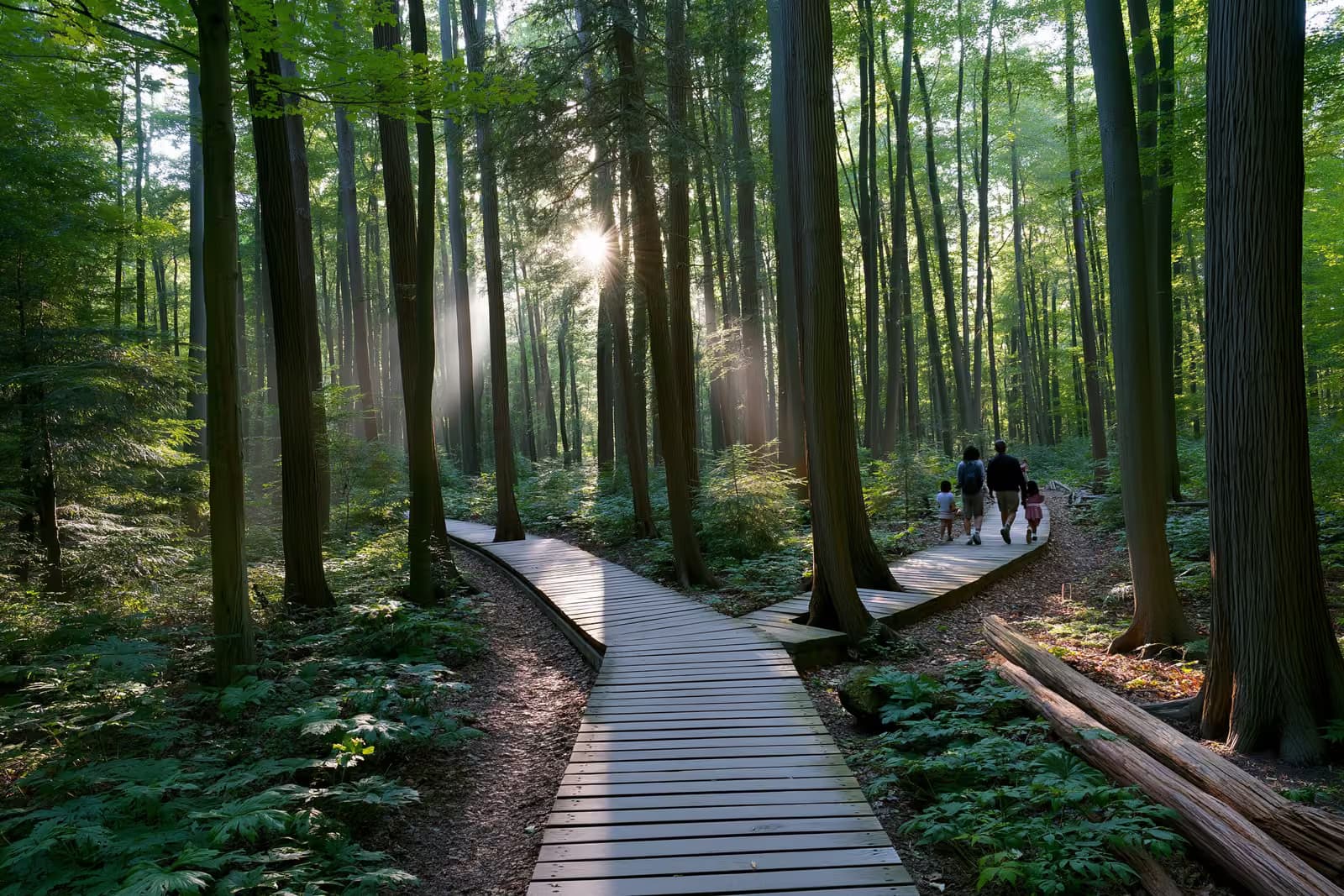
L'un des plaisirs discrets de la vie en Allemagne réside dans l'abondance d'espaces naturels protégés et accessibles à pied depuis presque chaque ville. Ce chapitre est consacré aux grands espaces naturels au-delà du parc municipal : les parcs nationaux, les parcs naturels, les zones de loisirs qui entourent chaque ville, ainsi que les lacs et forêts artificiels où les Allemands aiment passer un week-end actif en plein air. L'objectif est ici pratique. À la fin de ce chapitre, vous comprendrez comment l'Allemagne classe ses espaces protégés en quelques catégories claires, ce que chacune représente pour vous en tant que visiteur, où trouver ceux situés près de chez vous, et comment y accéder à moindre coût et en profiter pleinement. Pour découvrir les parcs urbains du quotidien, les jardins familiaux et les espaces verts propices aux pique-niques et aux barbecues, consultez notre guide complémentaire. activités de plein air et parcsCe chapitre reprend là où le précédent s'arrête, aux abords de la ville.
Comment l'Allemagne gère sa nature protégée
L'Allemagne organise ses vastes espaces naturels protégés en trois grandes catégories, et savoir dans laquelle vous vous trouvez vous renseigne presque entièrement sur ce que vous êtes autorisé à y faire. Les plus stricts sont les parcs nationaux. Il y en a seize, et le principe directeur est « Natur Natur sein lassen », laisser la nature être la nature, ce qui limite volontairement l'activité humaine. Vous êtes généralement les bienvenus, mais il vous est demandé de rester sur les sentiers balisés, de tenir vos chiens en laisse, de ne rien emporter avec vous et de ne rien laisser derrière vous. Le plus ancien est la Forêt bavaroise (Bayerischer Wald), devenue le premier parc national d'Allemagne en 1970 et qui forme aujourd'hui une immense forêt sauvage le long de la frontière tchèque avec son voisin de l'autre côté de la frontière. D'autres parcs donnent un aperçu de la diversité des paysages : Berchtesgaden, à l'extrême sud, est le seul parc national alpin du pays, avec le massif escarpé du Watzmann et le Königssee, un lac aux allures de fjord ; trois parcs côtiers protègent le Wattenmeer, les vasières de la mer du Nord, site inscrit au patrimoine mondial de l'UNESCO ; Jasmund, sur l'île de Rügen, veille sur les falaises de craie blanche et la vieille hêtraie de la côte baltique ; la Suisse saxonne, au sud-est de Dresde, est célèbre pour ses impressionnantes tours de grès. Le plus récent des seize parcs nationaux, le Hunsrück-Hochwald, à cheval sur la Rhénanie-Palatinat et la Sarre, n'a été créé qu'en 2015 ; le réseau est donc encore en expansion. Répartis sur tout le territoire, des Alpes aux côtes de la mer Baltique et de la mer du Nord, ces parcs sont accessibles en une journée, quel que soit votre lieu de résidence. L'entrée est gratuite. Les parcs nationaux sont des lieux où l'on découvre une nature préservée, gérée pour elle-même et non pour notre confort, offrant des paysages uniques au monde.
La deuxième catégorie, et de loin la plus répandue, est celle des Naturparks, parcs naturels. L'Allemagne en compte plus d'une centaine, fonctionnant selon un principe totalement différent. Un Naturpark est généralement un vaste paysage culturel habité, comprenant terres agricoles, forêts, villages, etc., protégé autant pour les loisirs que pour la conservation. Cette catégorie est conçue pour les visiteurs : sentiers de randonnée balisés, pistes cyclables, centres d'accueil, aires de pique-nique, points de vue et sentiers familiaux en sont l'essence même. Lorsqu'un Allemand parle d'aller passer le week-end dans l'Eifel, la Forêt-Noire, la lande de Lunebourg ou le Bergisches Land, il se dirige généralement vers un Naturpark. Si vous cherchez un endroit où vous promener librement, emmener votre famille et ne pas trop vous soucier des règles strictes, un Naturpark est presque toujours la solution. La troisième catégorie, la Biosphärenreservat ou réserve de biosphère, est reconnue par l'UNESCO et se situe entre les deux : un paysage exploité divisé en zones, certaines strictement protégées, d'autres gérées de manière plus douce pour l'agriculture et le tourisme, l'ensemble du territoire étant géré comme un modèle de vie en harmonie avec la nature. Le Spreewald, au sud-est de Berlin, un labyrinthe de petits cours d'eau à explorer en canoë ou en barque à fond plat, et les collines du Rhön, en Allemagne centrale, comptent parmi les plus connus. Pour un nouveau venu, la règle est simple : en parc national, il faut respecter l'environnement et rester sur les sentiers balisés ; en parc naturel, on peut venir se détendre ; et en réserve de biosphère, on peut profiter des deux, selon la zone.
Les zones de loisirs où les Allemands passent réellement leurs week-ends
Tout ce qui mérite d'être visité ne porte pas le label officiel de zone protégée. Le terme que vous entendrez le plus souvent est « Naherholungsgebiet », que l'on peut traduire approximativement par « espace de loisirs local » : il s'agit d'une ceinture de bois, de lacs, de prairies riveraines et de collines douces située aux portes de chaque ville allemande et qui existe uniquement pour permettre aux citadins de s'évader quelques heures. Autour de Munich, ce sont la vallée de l'Isar et les lacs au sud ; autour de Hambourg, les forêts et les landes de la campagne environnante ; autour des villes de la Ruhr, une ceinture verte de terres gagnées sur la mer. Inutile de planifier une expédition pour en profiter. Le principe même d'un « Naherholungsgebiet » est simple : on peut s'y rendre en une demi-heure, se promener à pied, à vélo ou nager l'après-midi, et rentrer chez soi le soir même. Connaître le nom du plus proche de chez vous, ainsi que l'arrêt de tram ou de S-Bahn qui y mène, est l'une des informations locales les plus utiles à acquérir lorsqu'on arrive en Allemagne.
L'Allemagne fait également preuve d'originalité dans la reconversion des terrains industriels abandonnés. Dans la Ruhr, l'ancienne région charbonnière et sidérurgique de l'ouest, toute une ceinture d'anciennes usines sidérurgiques, de mines de charbon et de terrils a été transformée en parc public plutôt que clôturée. L'exemple le plus emblématique est le Landschaftspark Duisburg-Nord, une ancienne usine sidérurgique Thyssen dont on peut désormais escalader les hauts fourneaux pour admirer la vue, dont l'ancien gazomètre est devenu un bassin de plongée sous-marine et dont les bunkers à minerai ont été réaménagés en jardin d'escalade, le tout au cœur d'un espace vert accessible gratuitement jour et nuit. Ce parc fait partie d'un réseau plus vaste de sites industriels réinventés, disséminés le long de l'ancien lit de l'Emscher, et il est unique en son genre. Plus à l'est, une transformation encore plus importante est en cours : les mines de lignite à ciel ouvert autour de Leipzig et en Lusace ont été inondées pour créer de nouveaux archipels lacustres. Le Leipziger Neuseenland, la « nouvelle région lacustre de Leipzig », et le Lausitzer Seenland offrent désormais la possibilité de se baigner, de faire de la voile, du stand-up paddle et du vélo en bord de lac, sur des étendues d'eau qui, il y a une génération, étaient des mines de charbon. Ils illustrent de façon frappante la rapidité avec laquelle un paysage dégradé peut se transformer en espace de loisirs, et ce sont des endroits vraiment agréables pour passer une journée d'été.
Pour les familles et tous ceux qui apprécient la nature avec un cadre structuré, deux autres types de lieux méritent d'être connus. Le Wildpark (ou Tierpark), parc animalier, est un grand enclos, généralement ouvert, où vivent des animaux indigènes et parfois exotiques dans de vastes pâturages que l'on traverse à pied. Ces parcs sont généralement beaucoup moins chers et plus calmes qu'un zoo et souvent situés en forêt. On y trouve souvent des cerfs, des sangliers et d'autres espèces locales que l'on peut nourrir ou observer de près, ce qui en fait une sortie idéale avec de jeunes enfants. Le Kletterwald (ou Hochseilgarten), parc d'aventure en hauteur, est l'autre lieu de prédilection des familles : un parcours de ponts de cordes, de plateformes et de tyroliennes tendus entre les arbres, avec harnais et lignes de sécurité, allant de douces boucles à hauteur d'enfant à des parcours plus exigeants en hauteur. On en trouve dans les bois près de la plupart des grandes villes, et aucune expérience n'est requise pour s'essayer aux parcours les plus faciles. Ces deux types de parcs s'intègrent parfaitement à l'idée d'espace de loisirs et constituent une première approche de la nature pour ceux qui découvrent l'Allemagne. Pour une liste plus complète d'idées de sorties en famille, consultez notre guide sur activités pour la famille.
Être actif une fois sur place
L'intérêt de ces espaces réside dans le fait qu'ils sont conçus pour la pratique du vélo, et non pas seulement pour être contemplés. Le vélo est souvent le moyen le plus simple d'y accéder. La plupart des parcs naturels et des zones de loisirs sont sillonnés de pistes cyclables balisées (Radwege), et l'Allemagne possède un réseau exceptionnel d'itinéraires longue distance qui les traversent, dont beaucoup longent des rivières sur des chemins doux et généralement plats, parfaits pour une journée de détente plutôt que pour un effort physique intense. Vous pouvez louer un vélo dans la plupart des villes ou emporter le vôtre dans les trains régionaux en dehors des heures de pointe, muni d'un billet vélo. Pour en savoir plus sur l'organisation du réseau cyclable allemand et les itinéraires longue distance qui valent le détour, consultez notre guide. culture et itinéraires du véloLa marche est l'autre option universelle : les réseaux de sentiers balisés dans les parcs naturels proposent des boucles courtes, signalées par des symboles colorés, ainsi que des itinéraires de grande randonnée. Si vous préférez la randonnée en montagne, avec l'équipement adéquat et la planification d'itinéraire que cela implique, vous trouverez un chapitre dédié dans notre guide. aventures en plein air et randonnée; il suffit ici de dire que le sentier est presque toujours déjà balisé et cartographié pour vous.
L'eau est un atout majeur, surtout en été. Les lacs artificiels, les lacs situés dans les zones de loisirs et les rivières paisibles des réserves de biosphère se prêtent à la baignade, au canoë, à la voile et au stand-up paddle. Là où ces activités sont aménagées, vous trouverez des points de location, des pontons et des zones de baignade délimitées. Les règles et les consignes de sécurité relatives aux activités nautiques sont détaillées dans notre guide. sports et activités nautiquesIl est donc judicieux de se renseigner avant d'entreprendre quoi que ce soit. Les parcs naturels sont conçus pour les familles et les personnes souhaitant apprendre en se promenant. Nombre d'entre eux proposent un « Naturerlebnispfad », un sentier de découverte de la nature jalonné de stations interactives expliquant la faune et la flore locales. Certains disposent également d'un « Barfußpark », un parc où l'on marche pieds nus sur un chemin recouvert de boue, de sable, de galets, d'eau et de copeaux de bois, permettant ainsi de ressentir les différentes surfaces. Ces deux options sont peu coûteuses, voire gratuites, et font le bonheur des enfants. Ajoutez à cela l'observation discrète de la faune sauvage, particulièrement appréciée dans les parcs nationaux, des cerfs et sangliers aux oiseaux marins du Wattenmeer et aux grues en migration, et vous obtenez un large éventail d'activités. Le petit matin et l'heure précédant le crépuscule sont les meilleurs moments pour observer les animaux. Quelques gestes de courtoisie - rester silencieux, garder ses distances et utiliser des jumelles plutôt que de s'approcher - vous récompenseront largement de vos efforts. Rien de tout cela ne requiert de compétences particulières ni d'équipement coûteux, ce qui explique en partie pourquoi ces domaines s'intègrent si facilement dans la vie quotidienne ici.
Vous n'avez pas à vous débrouiller seul. Presque tous les parcs nationaux et les grands parcs naturels disposent d'un centre d'accueil, souvent appelé Nationalparkzentrum, Naturparkhaus ou Haus des Gastes, où vous pouvez vous procurer des cartes gratuites, demander conseil au personnel sur les sentiers adaptés à votre groupe et vous inscrire à des visites guidées. Ces Führungen (visites guidées) sont une excellente façon de découvrir la nature : promenades matinales à la découverte de la faune, randonnées accompagnées par des gardes forestiers, excursions en canoë dans la Spreewald, traversées des vasières du Wattenmeer avec un guide agréé connaissant les marées, et journées découverte pour enfants pendant les vacances scolaires. Nombre de ces activités sont gratuites ou ne coûtent que quelques euros, et elles sont généralement proposées en allemand, bien que certains parcs situés dans des régions touristiques les proposent également en anglais ; n'hésitez donc pas à vous renseigner. Participer à une visite guidée vous permettra de vous familiariser avec un lieu que vous ne connaissez pas encore et vous apprendra rapidement à l'explorer par la suite en toute autonomie.
Accès, règles et comment s'y rendre
Ce qui est formidable, c'est l'ouverture. L'Allemagne bénéficie d'un large droit d'accès à la campagne, le Betretungsrecht, qui permet d'accéder à pied aux forêts et aux espaces ouverts pour les loisirs, généralement gratuitement, même sur les terrains privés. Ce droit d'accès aux forêts, ainsi que ses implications, sont expliqués dans notre guide complémentaire. activités de plein air et parcsEn résumé, vous pouvez vous promener en forêt, mais à vos risques et périls, et la pratique du vélo ou de l'équitation est limitée aux sentiers balisés. Il est important de comprendre, pour ce chapitre, que ce droit est le plus étendu dans les campagnes et les parcs naturels, et le plus restreint dans les parcs nationaux, où la conservation prime. Dans un parc national, vous devez impérativement rester sur les sentiers balisés, et dans les zones centrales strictement protégées, il est strictement interdit de les quitter. Des panneaux à l'entrée et aux points de départ des sentiers vous indiqueront la zone dans laquelle vous vous trouvez et les règles applicables. Il ne s'agit pas d'une bureaucratie gratuite ; s'écarter des sentiers dans une zone centrale protégée peut détruire l'habitat même que le parc a pour vocation de préserver, et des amendes sont possibles.
Les chiens sont les bienvenus dans la plupart des régions, mais leur présence est soumise à des règles saisonnières strictes. Dans une grande partie de l'Allemagne, la période de reproduction (Brut- und Setzzeit) s'étend du début avril à la mi-juillet environ, bien que les dates et les règles exactes soient fixées par chaque Land. Pendant cette période, lorsque les oiseaux nichant au sol couvent leurs œufs et que les cerfs élèvent leurs faons, les chiens doivent être tenus en laisse dans de nombreuses régions, et même toute l'année dans certains parcs naturels et nationaux. Même en dehors de cette saison, un chien qui poursuit des animaux sauvages peut causer des blessures graves. Par mesure de sécurité et de courtoisie, il est donc recommandé de garder son chien en laisse, sauf indication contraire. Ce même principe s'applique à l'ensemble des règles de bienséance : emportez tous vos déchets avec vous, car de nombreux espaces naturels ne sont pas équipés de poubelles ; n'utilisez les feux de camp et les barbecues que là où ils sont expressément autorisés ; et laissez les plantes, les champignons et les pierres où vous les trouvez. Les Allemands prennent très au sérieux cette discrète éthique du «Leave No Trace» (ne laisser aucune trace), et la respecter fait partie des bonnes manières en matière d'accueil.
Se rendre dans ces lieux sans voiture est plus facile que beaucoup de nouveaux arrivants ne le pensent, et c'est là que le Deutschlandticket prend tout son sens. Cet abonnement mensuel national pour les transports en commun couvre les trains régionaux, les tramways et les bus dans tout le pays. Un seul billet vous permet ainsi de rejoindre la région des lacs un week-end et l'entrée d'un parc national le week-end suivant, votre vélo pouvant vous accompagner en dehors des heures de pointe. De nombreux parcs nationaux et grands parcs naturels sont d'ailleurs desservis par des gares régionales et des navettes afin que les visiteurs puissent s'y rendre sans voiture. Pour en savoir plus sur le fonctionnement du pass et son prix actuel, consultez notre guide. le billet d'AllemagneCombiner ce pass avec une excursion dans un espace naturel proche d'une voie ferrée est l'une des sorties agréables et économiques que vous puissiez faire en Allemagne.
Par où commencer
Si vous ne deviez retenir qu'une seule chose de ce chapitre, ce serait celle-ci : trouvez le nom de l'espace de loisirs le plus proche de chez vous et comment vous y rendre en transports en commun. Une simple recherche avec les mots-clés « Naherholungsgebiet » ou « Naturpark » suivis du nom de votre ville vous permettra généralement de trouver les options les plus proches, ainsi qu'une carte et la station la plus proche. Vous pourrez ainsi vous y rendre à pied ou à vélo ce week-end. Ensuite, élargissez votre recherche et repérez le parc national, le parc naturel et la réserve de biosphère les plus proches. Presque tous les Allemands vivent à une distance raisonnable d'au moins un de ces espaces, ce qui vous permettra de savoir à l'avance à quel point les règles y sont strictes et si le lieu est adapté aux familles.
Lors de votre visite, n'hésitez pas à profiter de l'aide gratuite déjà disponible. Commencez par le centre d'information touristique, s'il y en a un, prenez le plan gratuit et envisagez une visite guidée pour votre première fois afin de découvrir les lieux avec un guide. Vérifiez si les chiens doivent être tenus en laisse et si vous vous trouvez en saison ou dans une zone où la réglementation est plus stricte. Prévoyez un sac pour vos déchets et voyagez léger. Surtout, n'oubliez pas que la grande majorité de ces espaces verts sont entièrement gratuits : pas de billet, pas de réservation, pas d'adhésion, il s'agit simplement de terrains publics entretenus par l'État et accessibles à tous. Pour les parcs urbains et les jardins familiaux, consultez notre guide. activités de plein air et parcs Ce dernier est bien pratique en complément. Ensemble, ils offrent une vue d'ensemble, du banc de votre parc de quartier jusqu'aux confins d'un parc national, et s'y aventurer est un des véritables plaisirs quotidiens de la vie en Allemagne.
À propos de ces informations
Ce chapitre offre une orientation générale basée sur des informations largement diffusées concernant la vie quotidienne en Allemagne, et dont la dernière mise à jour date de juillet 2026. Il s'agit de conseils généraux et non d'avis juridiques, fiscaux ou médicaux personnalisés. Pour des informations plus détaillées et des sources officielles, veuillez consulter les chapitres associés sur WeLiveIn.de, dont les liens figurent dans le texte ci-dessus.
Cet article a été traduit de l'anglais.