Acheter une propriété en Allemagne
32 min de lecture
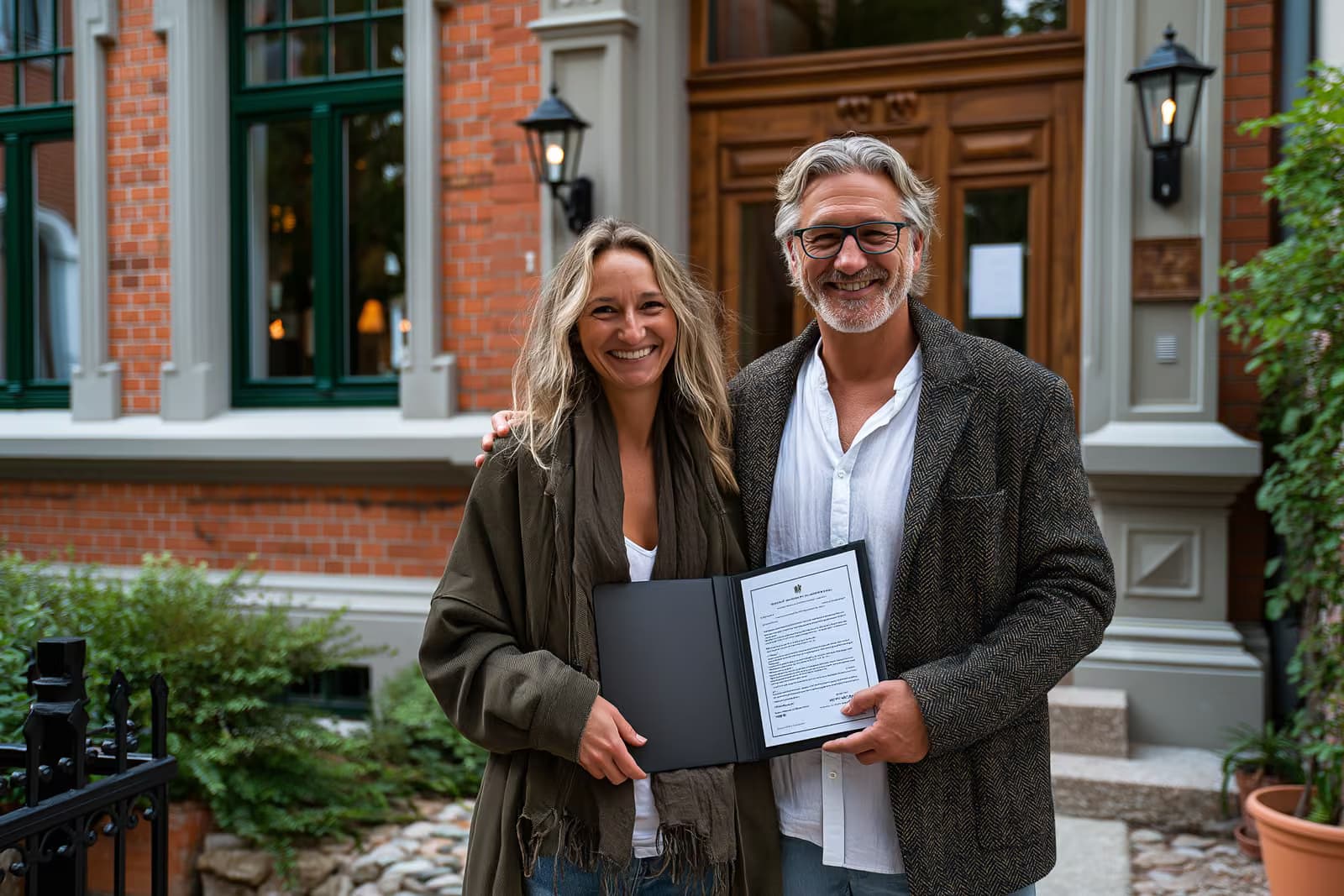
L'achat d'un bien immobilier en Allemagne est un processus long et très formalisé, ce qui est généralement une bonne nouvelle pour vous. Il est quasiment impossible que des problèmes surviennent sans que vous vous en rendiez compte. Un notaire neutre enregistre l'acte de vente, un registre foncier détermine la propriété du bien et les fonds ne sont débloqués qu'après l'inscription au registre, vous protégeant ainsi. Cette sécurité a pour prix une longue liste d'étapes, un vocabulaire allemand spécifique sans équivalent exact en français et des frais d'acquisition pouvant représenter environ un dixième du prix d'achat avant même que vous ne soyez propriétaire. Ce chapitre détaille les démarches à suivre pour acheter un bien immobilier en Allemagne : les frais supplémentaires, le rôle du notaire et pourquoi il est indispensable d'en faire l'impasse, le transfert effectif de propriété, les différences entre l'achat d'un appartement et celui d'une maison, et les difficultés rencontrées par les étrangers. Il aborde également les aspects les plus simples, en commençant par celui qui inquiète le plus.
L'achat d'un bien immobilier en Allemagne ne comporte aucune restriction de nationalité.
L'idée fausse la plus répandue concernant l'achat d'un bien immobilier en Allemagne est que les étrangers ont besoin d'une autorisation, d'un titre de séjour ou d'un passeport allemand. Ce n'est pas le cas. La loi allemande n'impose aucune restriction de nationalité pour l'acquisition d'un bien immobilier. Il n'existe aucune procédure d'approbation pour les acheteurs étrangers, aucun registre des nationalités autorisées, aucune durée minimale de séjour requise et aucune condition liée à votre Aufenthaltstitel (titre de séjour). Un touriste n'ayant jamais vécu en Allemagne peut acheter un appartement à Munich. Il en va de même pour un ressortissant d'un pays hors UE titulaire d'un permis de séjour temporaire, un étudiant ou une personne résidant de façon permanente dans un autre pays et n'ayant jamais mis les pieds dans le bâtiment.
Il ne s'agit ni d'une faille ni d'un oubli. Cela découle de la structure même de la loi. La loi relative à la taxe sur les mutations immobilières (Grunderwerbsteuergesetz) taxe la transaction sans tenir compte de l'identité du demandeur. Le Code civil allemand (Bürgerliches Gesetzbuch) encadre l'achat et la vente de terrains sans distinction entre Allemands et étrangers. Le registre foncier (Grundbuch) enregistre le nom et la date de naissance. Aucun de ces documents ne prévoit de critère de nationalité ; il n'existe donc aucune disposition légale à consulter : cette restriction n'existe tout simplement pas.
Ce qui diffère pour les étrangers, ce n'est pas le droit d'acheter, mais les démarches concrètes pour y parvenir. Le financement est le principal point de friction, et il s'agit d'une friction bien réelle, non imaginaire. Tout le reste - notaire, inscription au registre foncier, taxes, règles communautaires - s'applique exactement de la même manière qu'à un acheteur allemand. Si quelqu'un vous dit qu'un permis spécial est nécessaire, c'est soit qu'il confond l'Allemagne avec un pays qui restreint la propriété étrangère, soit qu'il essaie de vous vendre quelque chose.
À quoi ressemblera le marché en 2026
Le marché allemand a connu une période de correction en 2022 et 2023 suite à la hausse des taux d'intérêt, et s'est depuis stabilisé sur une croissance lente plutôt que sur une reprise. L'Office fédéral de la statistique (Statistisches Bundesamt) a indiqué le 25 juin 2026 que les prix de l'immobilier résidentiel au premier trimestre 2026 étaient supérieurs de 1.4 % à ceux de l'année précédente et de 0.3 % à ceux du trimestre précédent. Le marché est donc en mouvement, mais très légèrement. Miser sur une appréciation rapide du bien pour financer un achat, c'est se fier à l'espoir.
L'aspect le plus révélateur de cette publication concerne les zones où la croissance est faible. Les prix des appartements en propriété (Eigentumswohnungen) ont augmenté de 3.6 % sur un an dans les zones rurales peu peuplées et de 2.9 % dans les grandes villes hors des sept métropoles. Dans ces sept villes - Berlin, Hambourg, Munich, Cologne, Francfort-sur-le-Main, Stuttgart et Düsseldorf - les prix des appartements n'ont progressé que de 0.3 %. Dans les zones rurales densément peuplées, ils ont même reculé de 0.4 %. Ce ne sont pas les villes les plus chères qui sont en mouvement. L'idée reçue selon laquelle Munich et Francfort tirent l'ensemble du marché vers le haut est dépassée ; l'an dernier, c'est la périphérie qui a progressé, et non le centre.
Cela a une incidence sur l'interprétation des prix qui vous sont proposés. L'Allemagne ne possède pas de marché national unique ni de moyenne nationale significative. Le prix d'un bien immobilier est déterminé par son secteur (Land, District, Street) et son « Bodenrichtwert », la valeur foncière de référence officielle publiée par les commissions d'évaluation foncière municipales et accessible gratuitement à tous. Avant de considérer un prix demandé comme normal, consultez le Gutachterausschuss, la commission d'évaluation foncière indépendante du secteur, qui publie les données des transactions locales. Il s'agit du point de référence le plus objectif dont vous disposerez, et il est public.
Il convient également de noter que l'indice des prix immobiliers Destatis a été révisé à l'année 2025 en juin 2026, une opération effectuée par l'institut de statistiques environ tous les dix ans. Comparer un chiffre d'indice actuel avec celui cité dans un article de 2024 peut mener à une conclusion erronée, car les années de référence sont différentes. Il est donc essentiel de vérifier l'année de référence avant de se fier à une comparaison.
Frais annexes liés à l'achat d'un bien immobilier en Allemagne : ce que cela implique en plus du prix d'achat
Les « Kaufnebenkosten », frais annexes à l'acquisition d'un bien immobilier, surprennent souvent les acheteurs venant de pays où les transactions sont moins onéreuses. Ils représentent généralement environ 10 % du prix d'achat, et peuvent atteindre 15 % dans les cas les plus défavorables, notamment en termes de terrain et d'agence. Ces frais sont payables comptant. Aucun organisme prêteur ne les considère comme faisant partie de la valeur du bien, car ils n'en font pas partie : si vous avez payé 400 000 euros et que 40 000 euros ont été prélevés pour les impôts, le notaire et l'agent immobilier, la banque considère toujours le bien comme un actif de 400 000 euros. C'est pourquoi les organismes prêteurs allemands exigent que vous preniez en charge les « Nebenkosten » en plus de votre apport initial.
Les coûts se décomposent en quatre éléments. La taxe sur les mutations immobilières (Grunderwerbsteuer) est la plus importante et dépend entièrement du Land où se situe le bien. Les frais de notaire et d'enregistrement foncier (Notarkosten et Grundbuchkosten) représentent ensemble environ 1.5 à 2 % du prix, dont environ 1.0 à 1.5 % pour le notaire et environ 0.5 % pour l'enregistrement. La commission de l'agent immobilier (Maklerprovision) n'est due que si un agent intervient, et les règles relatives à son paiement ont évolué en 2020. Tout le reste - géomètre, traducteur, avocat - est facultatif en droit, mais souvent judicieux en pratique.
Un détail important concernant les honoraires du notaire est à retenir dès le départ, car cela vous évitera des efforts inutiles : ces honoraires ne sont ni négociables ni concurrentiels. Ils sont fixés au niveau national par la loi relative aux coûts des tribunaux et des notaires (Gerichts- und Notarkostengesetz), et chaque notaire en Allemagne applique le même tarif pour une transaction d'une valeur identique. Chercher un notaire moins cher n'est pas une stratégie, car il n'en existe pas. Privilégiez plutôt un notaire maîtrisant la langue, disponible et clair dans ses explications. Un notaire qui prendra le temps de vous expliquer une clause en anglais vaut bien plus qu'une réduction illusoire.
Le chapitre sur les frères et sœurs opportunités d'investissement Ce chapitre aborde la même règle des dix pour cent environ, du point de vue de l'investisseur, et explique notamment pourquoi un bien immobilier doit prendre une valeur significative avant qu'une vente ne permette d'atteindre le seuil de rentabilité. Si vous envisagez un achat comme un investissement plutôt que comme une résidence principale, lisez ce chapitre en parallèle.
Grunderwerbsteuer : le plus gros coût supplémentaire
La taxe sur les transferts (Grunderwerbsteuer) est un impôt prélevé une seule fois sur le transfert lui-même. Son taux est fixé par chaque Länder et non par le gouvernement fédéral. C'est pourquoi un même appartement de 400 000 euros est taxé à hauteur de 14 000 euros en Bavière et de 26 000 euros en Rhénanie-du-Nord-Westphalie. Le taux fédéral de base est de 3.5 %, et depuis 2006, les Länder sont libres de fixer leur propre taux. Quinze des seize Länder l'ont augmenté. Seule la Bavière applique encore le taux de base.
À compter de 2026, les taux sont les suivants : Bavière : 3.5 % ; Bade-Wurtemberg, Basse-Saxe, Rhénanie-Palatinat, Saxe-Anhalt et Thuringe : 5.0 % ; Brême, Hambourg et Saxe : 5.5 % ; Berlin, Hesse et Mecklembourg-Poméranie-Occidentale : 6.0 % ; Brandebourg, Rhénanie-du-Nord-Westphalie, Sarre et Schleswig-Holstein : 6.5 %. Ces taux sont susceptibles d’évoluer. Brême a relevé son taux de 5.0 % à 5.5 % le 1er juillet 2025, et la Thuringe l’a abaissé de 6.5 % à 5.0 % le 1er janvier 2024. Avant d’établir votre budget, vérifiez le taux en vigueur auprès du ministère des Finances du Land concerné plutôt que de vous fier à un chiffre publié dans un article, y compris celui-ci.
La taxe est due par l'acte notarié, et non par l'inscription au registre foncier. Le notaire déclare la vente au Finanzamt, l'administration fiscale, qui vous adresse ensuite un avis d'imposition (Grunderwerbsteuerbescheid), généralement sous quelques semaines. Après paiement, le Finanzamt délivre une attestation de non-objection (Unbedenklichkeitsbescheinigung), et le registre foncier ne pourra procéder au transfert de propriété à votre nom sans ce document. C'est un obstacle insurmontable : vous ne pouvez devenir propriétaire tant que la taxe de mutation n'est pas acquittée.
L'article 3 de la loi allemande sur la taxe sur les ventes immobilières (GrEStG) prévoit des exemptions qui concernent plus de personnes qu'on ne le pense. Un achat dont la valeur imposable n'excède pas 2 500 euros est exonéré. Un transfert entre époux ou partenaires de vie enregistrés est également exonéré, de même qu'un transfert à un ex-conjoint dans le cadre du partage des biens après un divorce. Enfin, un achat auprès d'un parent en ligne directe (parents, grands-parents ou enfants) est totalement exonéré. Si vous achetez la maison de vos parents, vous n'êtes pas soumis à la taxe sur les ventes immobilières. Les frères et sœurs, n'étant pas en ligne directe, ne sont pas concernés.
Il est important de connaître une réduction légitime : la taxe sur le bien-fonds de la construction (Grunderwerbsteuer) s'applique au terrain et au bâtiment, et non aux biens meubles vendus avec. Si le prix comprend une cuisine équipée, un sauna ou des meubles intégrés, ces éléments peuvent être détaillés séparément dans le contrat à leur valeur réelle et déduits de l'assiette imposable. L'administration fiscale (Finanzamt) accepte cette pratique lorsque les valeurs sont plausibles et que les biens sont réellement meubles ; elle la refuse lorsque les chiffres semblent inventés. Il est déconseillé d'insister. Un prix de cuisine excessivement gonflé dans un contrat est susceptible d'attirer l'attention sur l'ensemble de la transaction.
Le Makler et qui paie la provision
Un Makler est un agent immobilier, et sa commission, appelée Maklerprovision ou Courtage, s'élève généralement à 3.6 % du prix TTC pour chaque partie. Jusqu'à fin 2020, il était courant en Allemagne qu'un vendeur mandate un agent et transfère contractuellement l'intégralité de la commission à l'acheteur, qui n'avait aucun droit de regard sur la nomination de l'agent et n'entretenait aucune relation avec lui. Cette pratique est désormais révolue pour les transactions immobilières résidentielles.
Depuis le 23 décembre 2020, les articles 656a à 656d du Code civil allemand (BGB) régissent cette situation. L'article 656a exige qu'un contrat de vente (Maklervertrag) pour l'achat d'un appartement ou d'une maison individuelle soit établi par écrit, c'est-à-dire au moins sous une forme durable, comme un courriel ; un accord purement verbal n'est pas valable. L'article 656c concerne le cas où l'agent perçoit des honoraires des deux parties : il ne peut le faire que si les deux parties s'engagent à verser le même montant, et si l'agent renonce à ses honoraires pour l'une des parties, l'autre partie est également libérée de son obligation. L'article 656d couvre le cas plus fréquent où seul le vendeur a mandaté l'agent : un accord vous obligeant à payer ou à rembourser une commission n'est valable que si le vendeur reste redevable d'une somme au moins égale à la vôtre, et votre part n'est due qu'une fois que le vendeur a effectivement payé la sienne et l'a justifiée.
En clair : pour l’achat d’un logement classique, vous ne pouvez pas payer plus de la moitié de la commission, jamais plus que ce que le vendeur a payé, et jamais avant que ce dernier n’ait réglé la somme due. Si un contrat vous oblige à prendre en charge l’intégralité de la commission pour un appartement ou une maison, cette clause est nulle. De même, si elle vous impose de payer avant que le vendeur n’ait réglé la commission et fourni une preuve de paiement, ce délai est également nul.
Les limites du champ d'application sont importantes, et les agents les connaissent même lorsque les acheteurs les ignorent. L'article 656b restreint ces protections aux cas où l'acheteur agit en tant que consommateur (Verbraucher) et où le bien est un logement (Wohnung) ou une maison individuelle (Einfamilienhaus). Un terrain nu, un local commercial et un immeuble d'appartements (Mehrfamilienhaus) ne sont pas concernés. Si vous achetez un immeuble de trois logements à titre d'investissement, les règles habituelles s'appliquent et la totalité de la commission peut vous être facturée. Renseignez-vous bien sur le type de bien que vous achetez avant de supposer être protégé.
Les règles équivalentes en matière de location fonctionnent différemment et sont abordées dans le chapitre consacré à trouver un logementEn matière de location, le principe du « Bestellerprinzip » stipule que la partie ayant mandaté l'agent immobilier prend en charge l'intégralité des frais, sans partage. Il ne faut pas transposer les règles de la location à l'achat, ni l'inverse. Ce sont des lois différentes, régies par des logiques distinctes.
La présence du notaire est obligatoire.
Voici la règle qui régit l'intégralité de la transaction. Article 311b(1) du Code civil allemand (BGB) : un contrat par lequel une partie s'engage à transférer ou à acquérir la propriété d'un bien immobilier doit faire l'objet d'un acte notarié (Beurkundung). Un contrat de vente non notarié est nul. Il n'est ni fragile, ni risqué, ni simplement difficile à faire appliquer : il est juridiquement inexistant. Un contrat signé entre particuliers pour une maison en Allemagne, une poignée de main, un échange de courriels confirmant chaque condition, un acompte versé : rien de tout cela ne crée d'obligation de vente ou d'achat. Chaque partie peut se retirer et l'autre perd tout droit sur le bien.
Cette même disposition comporte sa propre clause de régularisation : un contrat non notarié devient pleinement valable une fois l’Auflassung et l’inscription au Grundbuch effectuées. En pratique, cela reste théorique, car aucune de ces démarches ne peut être réalisée sans notaire. L’interprétation la plus simple est que, tant que le contrat n’est pas enregistré chez le notaire, il n’est pas valide, quels que soient les échanges, les accords ou les paiements effectués.
Le notaire n'est pas votre avocat. C'est une erreur fréquente des acheteurs étrangers, et cela leur coûte cher. Un notaire allemand est un officier public neutre, tenu à une obligation égale envers les deux parties et sans préférence pour aucune. Il s'assure de la validité juridique du contrat, de la bonne compréhension des termes du contrat par les deux parties et du bon fonctionnement des mécanismes. Il ne négocie pas pour vous, ne vous signale pas un prix excessif et ne vous conseille pas sur l'opportunité de l'achat. Si vous souhaitez être représenté, vous devez faire appel à un avocat (Rechtsanwalt) séparément et à vos frais. De nombreux acheteurs étrangers le font, et pour un achat important dans une langue étrangère, c'est un investissement judicieux.
La séance d'enregistrement est une formalité essentielle. Le notaire lit l'intégralité du contrat à haute voix, en allemand. Il ne s'agit pas d'une simple cérémonie, mais d'une obligation légale, ce qui explique la durée de la séance, soit une heure ou plus. Si votre compréhension de l'allemand est insuffisante pour suivre la lecture du texte juridique, vous devez vous faire accompagner d'un interprète assermenté, ce que le notaire exigera. Certains notaires proposent une version bilingue (anglais ou autre) pour l'enregistrement. Il est donc préférable de prévoir cela à l'avance afin d'éviter toute mauvaise surprise le jour du rendez-vous. Si vous achetez en tant que consommateur auprès d'un vendeur professionnel, vous avez également le droit de recevoir le projet de contrat au moins deux semaines avant la séance. Demander ce délai, même s'il n'est pas obligatoire, est tout à fait normal et toujours judicieux.
Auflassung, Auflassungsvormerkung et comment la propriété évolue réellement
En droit allemand, la promesse de vente est distincte de la transaction, et une fois cette distinction comprise, le déroulement d'un achat immobilier devient clair. L'acte notarié de vente constitue la Verpflichtungsgeschäft, l'obligation : il engage le vendeur à transférer la propriété et l'acheteur à payer. Il ne vous confère pas pour autant la propriété. L'Auflassung, ou Einigung, est l'accord distinct entre le vendeur et l'acheteur stipulant le transfert effectif de propriété. Cet accord est généralement enregistré lors de la même séance que l'acte notarié. Même cette enregistrement ne vous confère pas la propriété. Le transfert de propriété n'intervient que lorsque le Grundbuchamt, le bureau du cadastre, inscrit votre nom au Grundbuch. C'est le registre foncier, et non l'acte notarié, qui fait de vous le propriétaire.
Cela crée un danger évident. Entre la signature du contrat et l'inscription au registre foncier, il s'écoule généralement plusieurs semaines ou mois durant lesquels le vendeur reste propriétaire et pourrait, en principe, vendre le bien à un tiers, l'hypothéquer ou le faire saisir par ses créanciers. L'acte qui comble ce vide juridique est l'Auflassungsvormerkung, une inscription prioritaire de transfert de propriété inscrite au registre foncier peu après la signature du contrat. Elle vous garantit vos droits. Une fois cette inscription effectuée, toute disposition ultérieure qui vous serait défavorable est inopposable. Il s'agit de la protection la plus importante dont vous bénéficiez en tant qu'acquéreur, et c'est ce qui explique le déroulement d'une acquisition immobilière en Allemagne.
La procédure de paiement s'ensuit. Le paiement ne s'effectue pas à la signature. Le notaire vous adresse un avis d'échéance du prix d'achat (Fälligkeitsmitteilung), et ce, uniquement après vérification de plusieurs conditions : inscription de l'inscription au registre foncier (Auflassungsvormerkung), levée ou obtention de la mainlevée de toute hypothèque ou droit de tiers inscrit au registre, et renonciation ou extinction du droit de préemption municipal (Vorkaufsrecht). C'est seulement à ce moment-là que vous transférez les fonds, généralement directement au vendeur. Un compte séquestre, ouvert par le notaire, existe, mais n'est utilisé que lorsque la transaction l'exige réellement, l'inscription au registre foncier assurant déjà la protection nécessaire lors d'une vente classique.
Avant toute chose, consultez le Grundbuch. Le notaire en obtiendra un extrait ; demandez-le et examinez-le attentivement. Il comporte trois sections, chacune pouvant réserver une mauvaise surprise. La section I mentionne le propriétaire, ce qui vous indique si le vendeur est effectivement en droit de vendre. La section II recense les Lasten und Beschränkungen, les charges et restrictions : un Wegerecht, un droit de passage permettant à un voisin de traverser la propriété ; un Nießbrauch ou Wohnrecht, un usufruit ou un droit d’habitation viager permettant à un ancien propriétaire ou à un proche d’occuper le bien jusqu’à la fin de ses jours ; un Erbbaurecht, un bail emphytéotique où vous êtes propriétaire du bâtiment mais pas du terrain sur lequel il est bâti. La section III recense les Grundschulden et Hypotheken, les sûretés garantissant les prêts. Aucun de ces documents n’est visible lors d’une visite. Ils sont tous attachés au bien.
Acheter un appartement, c'est s'intégrer à une communauté.
Lorsque vous achetez un Eigentumswohnung, un appartement en pleine propriété, vous n'achetez pas seulement des pièces. Vous acquérez le Sondereigentum, la propriété exclusive de l'intérieur de votre appartement, ainsi qu'une quote-part du Gemeinschaftseigentum, les parties communes : le toit, la façade, la cage d'escalier, le système de chauffage et le terrain. Cette quote-part fait de vous un membre de la Wohnungseigentümergemeinschaft, la copropriété (WEG). L'adhésion est obligatoire et non résiliable ; elle est liée à l'achat de l'appartement, que vous le souhaitiez ou non.
Concrètement, vous ne décidez plus seul. L'assemblée générale des copropriétaires (Eigentümerversammlung) statue sur les parties communes par un vote, et ses décisions vous engagent même si vous avez voté contre ou si vous étiez absent. Si l'assemblée décide de rénover la façade pour 900 000 euros, votre quote-part sera à votre charge. Il en va de même pour le remplacement du système de chauffage. Le gestionnaire immobilier, mandaté par la copropriété, met en œuvre ces décisions et envoie les factures. Votre poids de vote est généralement proportionnel à votre quote-part de copropriété (Miteigentumsanteil). Ainsi, dans un immeuble comprenant un grand appartement et plusieurs petits, les petits copropriétaires peuvent être systématiquement mis en minorité.
Les charges de copropriété (Hausgeld) correspondent à votre contribution mensuelle à la copropriété, souvent mal interprétée par les acheteurs étrangers. Elles sont différentes des charges locatives (Nebenkosten). Elles couvrent les frais de fonctionnement des parties communes, les honoraires du syndic, l'assurance et une contribution au fonds de réserve. Une partie de ces charges serait récupérable auprès du locataire si vous louiez l'appartement ; une part significative - les frais de gestion et la contribution au fonds de réserve - ne le serait pas. Pour calculer le rendement locatif, il est impératif de soustraire la part non récupérable, sans quoi le calcul est erroné.
C'est au niveau de la réserve qu'il faut porter une attention toute particulière avant d'acheter. L'article 19(2) de la loi allemande sur les sociétés de copropriétaires (WEG) énumère les éléments d'une bonne administration : un règlement de copropriété (Hausordnung) (n° 1) ; une assurance adéquate des parties communes à leur valeur de remplacement, assortie d'une assurance responsabilité civile du propriétaire (n° 3) ; et la constitution d'une réserve pour l'entretien (angemessene Erhaltungsrücklage) (n° 4). Il est important de noter la terminologie. Depuis la réforme de la WEG en 2020, le terme légal est « Erhaltungsrücklage », bien que la plupart des documents, y compris les agents immobiliers et les documents plus anciens, utilisent encore « Instandhaltungsrücklage ». Il s'agit de la même somme : l'argent que la copropriété met de côté pour les réparations futures.
Une réserve insuffisante représente un passif caché à votre nom. Si l'immeuble a besoin d'une nouvelle toiture et que la réserve ne couvre qu'une partie du coût, la différence provient d'une « Sonderumlage », une charge spéciale répartie entre les copropriétaires, que vous devrez payer quelle que soit votre date d'emménagement. Avant de vous engager pour un appartement, demandez les procès-verbaux des trois dernières années de l'assemblée générale des copropriétaires (Eigentümerversammlung), le plan de gestion actuel (Wirtschaftsplan), le budget, le dernier relevé annuel (Jahresabrechnung), le relevé annuel, la déclaration de copropriété (Teilungserklärung), l'acte de partage définissant vos droits et obligations, ainsi que les règles de l'immeuble, et le solde actuel de la « Erhaltungsrücklage ». Les procès-verbaux sont les documents les plus révélateurs. Décisions reportées, conflits récurrents, disputes incessantes avec le syndic ou réparations repoussées depuis quatre ans : tout cela y figure et nulle part ailleurs. Un vendeur qui tarde à vous fournir ces documents doit vous alerter.
Grundsteuer depuis la réforme de 2025
La Grundsteuer est la taxe foncière annuelle, et elle est différente de la Grunderwerbsteuer, payable une seule fois. La ressemblance entre les deux termes est source de confusion. La Grunderwerbsteuer est payée une seule fois, lors de l'achat. La Grundsteuer, quant à elle, est payable chaque année tant que vous êtes propriétaire.
La réforme est entrée en vigueur le 1er janvier 2025, après que la Cour fédérale de justice (Bundesverfassungsgericht) a déclaré inconstitutionnel, en 2018, l'ancien système d'évaluation foncière, car il reposait sur des valeurs datant de 1964 à l'ouest et de 1935 à l'est. Tous les biens immobiliers en Allemagne ont été réévalués. Le nouveau calcul de la taxe foncière s'effectue en trois étapes : la valeur cadastrale (Grundsteuerwert), multipliée par le coefficient d'imposition (Steuermesszahl), puis par le multiplicateur fixé par la commune. C'est ce dernier coefficient qui explique pourquoi deux maisons identiques dans des villes voisines peuvent être soumises à des taxes foncières très différentes, et pourquoi c'est finalement votre commune, et non Berlin, qui détermine le montant de votre taxe.
Il n'existe pas de méthode nationale unique. La plupart des Länder utilisent le Bundesmodell, le modèle fédéral, basé sur la valeur du bien. D'autres ont opté pour une approche différente : la Bavière utilise un Flächenmodell pur, basé sur la surface habitable plutôt que sur la valeur du bien ; la Basse-Saxe utilise un Flächen-Lage-Modell qui intègre un facteur de localisation ; et Hambourg, la Hesse et le Bade-Wurtemberg appliquent chacun leurs propres variantes. Le modèle applicable dépend de la localisation du bien et influe sur le calcul de votre facture.
Les factures ont subi des variations importantes dans les deux sens lors de la mise en œuvre de la réforme, et ces changements n'étaient pas aléatoires. Les modèles basés sur la valeur ont augmenté les impôts fonciers pour les propriétés dont la valeur réelle avait largement dépassé l'évaluation de 1964 et les ont diminués pour d'autres ; les maisons individuelles ont souvent été plus durement touchées que les appartements. Les municipalités ont été informées que la réforme devait être globalement neutre sur le plan des recettes et qu'elles devaient ajuster leur taxe foncière en conséquence, mais beaucoup ne l'ont pas fait, ou l'ont ajusté d'une manière qui a augmenté les recettes. Si vous achetez une propriété, demandez au vendeur le montant actuel de la taxe foncière. Ne vous basez pas sur un ancien chiffre pour faire une estimation et ne tenez pas compte de la facture de 2024 du précédent propriétaire.
La réforme a fait l'objet de nombreux litiges, et il convient de préciser la situation à la mi-2026. Dans des décisions publiées le 10 décembre 2025 (II R 25/24, II R 31/24 et II R 3/25), la Cour fédérale des finances (Bundesfinanzhof) a jugé le modèle fédéral (Bundesmodell) conforme à la Constitution, rejetant les recours des propriétaires de Rhénanie-du-Nord-Westphalie, de Saxe et de Berlin. Les modèles régionaux (Land) n'avaient pas encore été statués à ce moment-là. Un recours constitutionnel a été déposé auprès de la Cour fédérale de justice (Bundesverfassungsgericht) en février 2026. Les évaluations sont donc maintenues et en cours de recouvrement, mais la question n'est peut-être pas encore tranchée. Si vous détenez une décision d'imposition foncière (Grundsteuerbescheid) que vous estimez erronée sur le fond - surface erronée, type de bien erroné -, vous disposez d'un délai d'un mois à compter de la notification pour introduire une objection formelle (Einspruch), sans possibilité de délai supplémentaire.
Energieausweis et les règles de chauffage changent maintenant
Le certificat de performance énergétique (Energieausweis) est obligatoire lors de la vente d'un bien immobilier. L'article 80 de la loi allemande sur la vente immobilière (GEG) précise les conditions de sa présentation. Le vendeur ou l'agent immobilier doit vous le présenter au plus tard lors de la visite (Besichtigung). En l'absence de visite, il doit vous être remis sans délai sur simple demande. Après la conclusion du contrat de vente, il doit vous être remis immédiatement. Sa durée de validité est de dix ans à compter de sa date d'émission. Son absence constitue un manquement à une obligation légale et justifie de poser des questions à ce sujet.
Il existe deux types de certificats de consommation énergétique (Verbrauchsausweis), et la différence est importante. Le Verbrauchsausweis se base sur la consommation réelle des anciens occupants, ce qui signifie qu'il évalue en partie leur mode de vie plutôt que les performances énergétiques du bâtiment. Le Bedarfsausweis, quant à lui, repose sur une évaluation technique de la structure et des systèmes du bâtiment ; c'est lui qui vous renseigne sur le logement lui-même, et non sur ses anciens occupants. Si le Verbrauchsausweis qui vous est remis pour un bâtiment ancien affiche des chiffres flatteurs, méfiez-vous : assurez-vous d'abord que les anciens occupants n'ont pas simplement coupé le chauffage.
La réglementation relative au chauffage évolue au moment de la rédaction de ce chapitre, et le temps verbal est important. La loi de modernisation des bâtiments (Gebäudemodernisierungsgesetz, GModG) a été adoptée par le Bundestag le 10 juillet 2026 et remplace la précédente loi sur le chauffage. L'obligation d'intégrer 65 % d'énergies renouvelables dans les nouveaux systèmes de chauffage est supprimée : les propriétaires choisissent eux-mêmes le type de chauffage, notamment le gaz et le fioul. Les nouvelles conditions de financement entreront en vigueur le 21 juillet 2026, avec une période de transition technique du 9 au 20 juillet 2026. Le système de subventions est désormais modulé en fonction des revenus, les aides les plus importantes étant destinées aux ménages les plus modestes, et les coûts éligibles sont plafonnés à 28 000 euros.
Le hic, c'est que les combustibles de chauffage doivent être totalement neutres en carbone à partir de 2045. Le Bio-Treppe, un dispositif progressif d'introduction des biocarburants, impose une part obligatoire de biocarburants dans les nouveaux systèmes de chauffage au gaz et au fioul dès 2029, avec un minimum de 10 % en 2029, 15 % en 2030, 30 % en 2035 et 60 % en 2040. Ainsi, un système de chauffage aux énergies fossiles installé aujourd'hui n'est pas illégal, mais son combustible devient progressivement plus cher, et la facture sera à la charge du propriétaire du bâtiment dans les années 2030. Si vous achetez une maison avec une chaudière à gaz de vingt ans, prévoyez son remplacement dans votre offre.
Si vous envisagez de louer le bien, un autre point vous concerne directement. Selon la loi allemande sur la taxe sur les gaz verts (GModG), les coûts liés aux redevances de réseau (Netzentgelte) et au prix du CO2 seront partagés à parts égales entre le propriétaire et le locataire pour les systèmes de chauffage au gaz ou au fioul nouvellement installés à partir de 2028. Ainsi, un propriétaire installant un chauffage aux énergies fossiles supporte la moitié des coûts qui seraient normalement à la charge du locataire. Le Bundestag, quant à lui, défend l'idée du point de vue du locataire : celui-ci ne supportera que la moitié des redevances de réseau et du prix du CO2 à partir de 2028. Attention à ne pas confondre cette date avec le Bio-Treppe mentionné précédemment, dont la progression de 10 % débutera en 2029. Les modalités d'application sont encore en cours d'élaboration par voie réglementaire - le gouvernement doit définir les règles relatives aux quotas de gaz vert d'ici le 1er décembre 2026 - il est donc conseillé de vérifier le texte final avant de vous y fier. L'orientation, cependant, est claire : l'installation d'un chauffage aux énergies fossiles dans un logement loué est délibérément rendue peu attractive pour les propriétaires.
Financement et points de friction rencontrés par les acheteurs étrangers
Le financement est l'aspect de l'achat immobilier en Allemagne qui se complique réellement en raison de votre pays d'origine, et il est important d'être franc à ce sujet. Les mécanismes du prêt hypothécaire allemand - Baufinanzierung (la période à taux fixe), Tilgung (l'amortissement) et Anschlussfinanzierung (le refinancement à l'échéance de la période à taux fixe) - sont expliqués en détail dans le chapitre consacré à ce sujet. crédit et prêts en AllemagneCe chapitre explique le fonctionnement du système de notation Schufa et les conséquences d'un défaut de paiement. Il ne reprend aucun de ces éléments. Lisez-le avant de contacter une banque, car le vocabulaire est essentiel et la décision relative à la Zinsbindung, en particulier, déterminera vos finances pour les dix prochaines années.
Ce qui vous concerne spécifiquement en tant qu'acheteur étranger, c'est la manière dont un prêteur examine votre dossier. Les prêteurs allemands évaluent séparément le bien immobilier et l'emprunteur, et c'est dans l'évaluation de ce dernier que la nationalité apparaît indirectement. Un titre de séjour avec une date d'expiration soulève la question de votre présence future en Allemagne dans cinq ans. Un contrat de travail encore en période d'essai (Probezeit) est souvent considéré comme inexistant. Des revenus perçus à l'étranger ou en devises étrangères introduisent un risque de change non sollicité par la banque. Un historique de crédit allemand court signifie que Schufa dispose de peu d'éléments à prendre en compte. Il ne s'agit pas de règles liées à la nationalité ; ce sont des facteurs de risque qui se trouvent être corrélés à une arrivée récente.
En pratique, d'après les courtiers en prêts immobiliers spécialisés sur ce marché, les acheteurs non-résidents et non-ressortissants de l'UE se voient souvent demander un apport personnel supérieur aux 20 % habituels, parfois considérablement plus, ainsi que davantage de justificatifs. Ne considérez aucun pourcentage précis comme une règle absolue : il ne s'agit pas d'une règle fixe, mais d'un élément de négociation qui varie selon la banque, le bien et le dossier. Ce qui est certain, c'est que vous devrez fournir davantage de fonds propres et de documents qu'un collègue allemand percevant le même salaire. Sachez également qu'un prêteur étranger, si vous en choisissez un, sera généralement plus lent qu'un prêteur allemand, ce qui est important lorsqu'une aide financière est assortie d'une date limite.
Deux éléments contribuent plus que tout autre à réduire ces frictions. Le premier est l'obtention, avant toute visite, d'une attestation de financement (Finanzierungsbestätigung ou Finanzierungszusage), une confirmation écrite de votre financement délivrée par une banque. Ce document vous permet de connaître votre budget réel et indique aux vendeurs que vous n'êtes pas un simple touriste. Le second est la préparation anticipée de votre dossier : bulletins de salaire, avis d'imposition, titre de séjour, justificatifs de vos fonds propres et de leur origine, ainsi que les justificatifs de vos revenus étrangers, traduits si nécessaire. Les banques allemandes ne sont pas hostiles aux acheteurs étrangers. Elles sont simplement prudentes, et les établissements de crédit prudents privilégient les dossiers complets.
Que se passe-t-il si vous vendez à nouveau ?
Réfléchissez à votre stratégie de revente avant d'acheter, surtout si vous envisagez de ne pas rester en Allemagne indéfiniment. L'article 23 de la loi allemande sur la vente de biens immobiliers (EStG) impose les plus-values réalisées dans un délai de dix ans (Spekulationsfrist), période de spéculation s'étendant de l'acquisition à la revente. Si vous vendez avant la fin de ce délai, la plus-value est imposable à votre taux d'imposition sur le revenu, ce qui représente un montant important pour un contribuable à hauts revenus. Si vous vendez après dix ans, la plus-value est exonérée d'impôt.
La même disposition prévoit deux exceptions, toutes deux liées à l'usage du bien comme résidence principale. La plus-value est exonérée si le bien a été utilisé exclusivement à des fins d'habitation entre l'acquisition et la vente, ou s'il a été utilisé à ces fins l'année de la vente et les deux années civiles précédentes. Cette seconde option est plus avantageuse qu'il n'y paraît, car la loi calcule les années civiles et non les années complètes : occuper le bien de décembre d'une année à janvier de l'année suivante suffit. L'article 23(3) prévoit également un plafond : les plus-values totales issues de ventes entre particuliers inférieures à 1 000 euros au cours d'une année civile sont exonérées d'impôt. Attention, il s'agit d'un plafond et non d'un abattement ; tout dépassement d'un euro entraîne l'imposition de la totalité de la plus-value, et non seulement de l'excédent.
Si vous louez le bien au lieu d'y habiter, c'est le délai de dix ans qui s'applique, et aucune exemption pour résidence principale ne peut vous sauver. Le chapitre sur opportunités d'investissement Ce document traite du Spekulationsfrist du point de vue de l'investisseur, ainsi que des autres taxes sur le capital en Allemagne, et il est plus pertinent si l'acquisition du bien est motivée par la recherche de rendement plutôt que par l'idée d'y résider.
Un autre point mérite l'avis d'un professionnel plutôt qu'un simple paragraphe de guide. Si vous quittez l'Allemagne, votre situation fiscale peut évoluer indépendamment de la propriété elle-même, notamment en raison de la taxe de sortie (Wegzugsbesteuerung), applicable à certains biens immobiliers au moment du départ, et des conventions de double imposition en vigueur entre l'Allemagne et votre pays de destination. En Allemagne, l'immobilier est généralement imposé au lieu où il se situe, mais l'interaction entre un déménagement, une vente et deux systèmes fiscaux est complexe et les conséquences d'une erreur peuvent être importantes. Il est donc conseillé de consulter un conseiller fiscal spécialisé en droit international avant de vendre, et non après.
Outils utiles pour l'achat d'un bien immobilier en Allemagne
Werkzeu.ge est une plateforme web d'outils administratifs, fiscaux et documentaires allemands, développée par Cryon UG, la société à l'origine de WeLiveIn.de. Certains de ses outils correspondent effectivement à ce chapitre, et il est important de préciser d'emblée que la plupart des fonctionnalités pertinentes sont payantes. La plateforme est en version bêta jusqu'au 30 novembre 2026 et ses conditions d'utilisation indiquent que certains outils peuvent être incomplets. Les informations fournies ne constituent en aucun cas un conseil juridique, fiscal ou financier, et aucune soumission de documents n'est effectuée via la plateforme : celle-ci prépare et effectue les calculs, et vous vous chargez des déclarations.
Miete contre Kauf (De plus, payant) compare la location à l'achat sur une période que vous définissez, ce qui est la véritable question de ce chapitre et celle à laquelle les gens répondent de manière émotionnelle. Calculateur de crédit (De plus, payé) produit un tableau d'amortissement, qui est ce dont vous avez besoin pour voir ce qu'un Zinsbindung se terminant dans dix ans laisse réellement en suspens. Grundsteuer-B Magicien (De plus, payant) explique en détail la taxe foncière annuelle selon les règles postérieures à 2025. Wohnflächen-Checker (De plus, payant) vérifie la surface habitable déclarée, ce qui est important lorsque la superficie en mètres carrés d'une annonce et la description du logement (Teilungserklärung) ne sont pas en accord.
Un outil gratuit s'avère directement utile ici. Formule Gast (gratuit sans compte) est une bibliothèque consultable de formulaires officiels fédéraux, étatiques et municipaux. Chaque formulaire est accompagné d'un lien vers la source, d'une date de récupération et d'une somme de contrôle. Les informations sont préremplies dans le navigateur et enregistrées sur votre appareil. L'achat de la version payante inclut les formulaires municipaux et fonciers associés : une demande de permis de construire (Bauantrag) si vous prévoyez des modifications structurelles, ainsi que les différents formulaires municipaux générés par l'achat. Veuillez noter que la version gratuite contient des publicités.
Attention aux fonctionnalités manquantes. Werkzeu.ge ne propose pas de simulateur de prêt immobilier ; vous ne pourrez donc pas connaître le montant du prêt qu'une banque est susceptible de vous accorder ni son taux. Pour cela, vous devez vous adresser à une banque ou à un courtier en prêts immobiliers, et aucun outil ne peut les remplacer. La plateforme est hébergée en Allemagne sur des serveurs Hetzner, utilise des formules déterministes plutôt que l'intelligence artificielle et n'utilise ni cookies de suivi ni cookies publicitaires. Les données saisies par les utilisateurs restent sur leur appareil, mais toute opération de stockage ou de consultation du compte bancaire est transmise au serveur. Les différents niveaux d'abonnement dans l'interface allemande sont : Gast (utilisable sans compte), Kostenlos (gratuit avec un compte gratuit), puis Plus et Pro. Pour connaître le prix de chaque niveau, veuillez consulter la page dédiée. prix actuels plutôt que n'importe quel chiffre cité dans un article.
Que faire ensuite
Commencez par le terrain, pas par le bien immobilier. Consultez le taux actuel de la taxe foncière (Grunderwerbsteuer) pour le Land où vous achetez, sur le site web du ministère des Finances de ce Land, et ajoutez-y environ 2 % pour les frais de notaire et d'inscription au registre foncier, ainsi que la commission applicable. Ce total correspond à la somme que vous devez disposer en plus de votre apport initial et détermine votre budget réel avant même de consulter une annonce. Ensuite, obtenez une attestation de financement (Finanzierungsbestätigung) écrite afin de négocier sur la base d'un montant réel et non d'une estimation optimiste.
Lorsque vous trouvez un bien immobilier, demandez les documents avant toute autre chose. Le Grundbuchauszug (titre de propriété), dans ses trois sections. L'Energieausweis (certificat énergétique), et de préférence un Bedarfsausweis (certificat de besoin). Le Grundsteuerbescheid (avis de retenue à la source). Pour un appartement, demandez le Teilungserklärung (acte de copropriété), les procès-verbaux des trois dernières années de l'Eigentümerversammlung (assemblée des copropriétaires), le Wirtschaftsplan (plan d'épargne), le dernier Jahresabrechnung (relevé annuel) et le solde de l'Erhaltungsrücklage (relevé de charges). Pour un immeuble ancien, faites réaliser une expertise par un géomètre-expert, à vos frais, avant de vous engager, et non après. Chacune de ces démarches vous coûtera moins cher que les problèmes qu'elle révèle.
Insistez ensuite sur le respect des délais. Demandez le projet de contrat au moins deux semaines avant le rendez-vous chez le notaire et utilisez ce délai. Si l'allemand vous est inaccessible, faites-le relire par un avocat et prévoyez à l'avance la présence d'un interprète assermenté ou un enregistrement bilingue, plutôt que de vous y prendre à la dernière minute. Assurez-vous que la mention « Auflassungsvormerkung » figure bien dans le contrat et comprenez que vous ne payez rien tant que le notaire ne l'a pas validé. La procédure allemande est lente car elle est conçue pour vous éviter de commettre une erreur irréversible trop rapidement. Acceptez cette lenteur.
Enfin, lisez attentivement ce chapitre avant de vous engager. Le chapitre sur crédit et prêts en Allemagne Il aborde les décisions relatives au financement de la construction qui vous coûteront ou vous feront économiser le plus d'argent au cours de la prochaine décennie. Opportunités d'investissement Cela couvre les aspects fiscaux s'il s'agit d'un investissement. notions de base de l'assurance habitation Elle couvre l'assurance habitation (Wohngebäudeversicherung), l'assurance construction qu'un prêteur exigera avant de débloquer le moindre euro, et que vous devrez souscrire avant la fin des travaux plutôt qu'après.
Références
Les informations contenues dans ce chapitre proviennent des sources et publications officielles énumérées ci-dessous, dont la dernière révision date de juillet 2026. Il s'agit de conseils généraux et non de conseils juridiques, fiscaux ou médicaux personnalisés.
Cet article a été traduit de l'anglais.