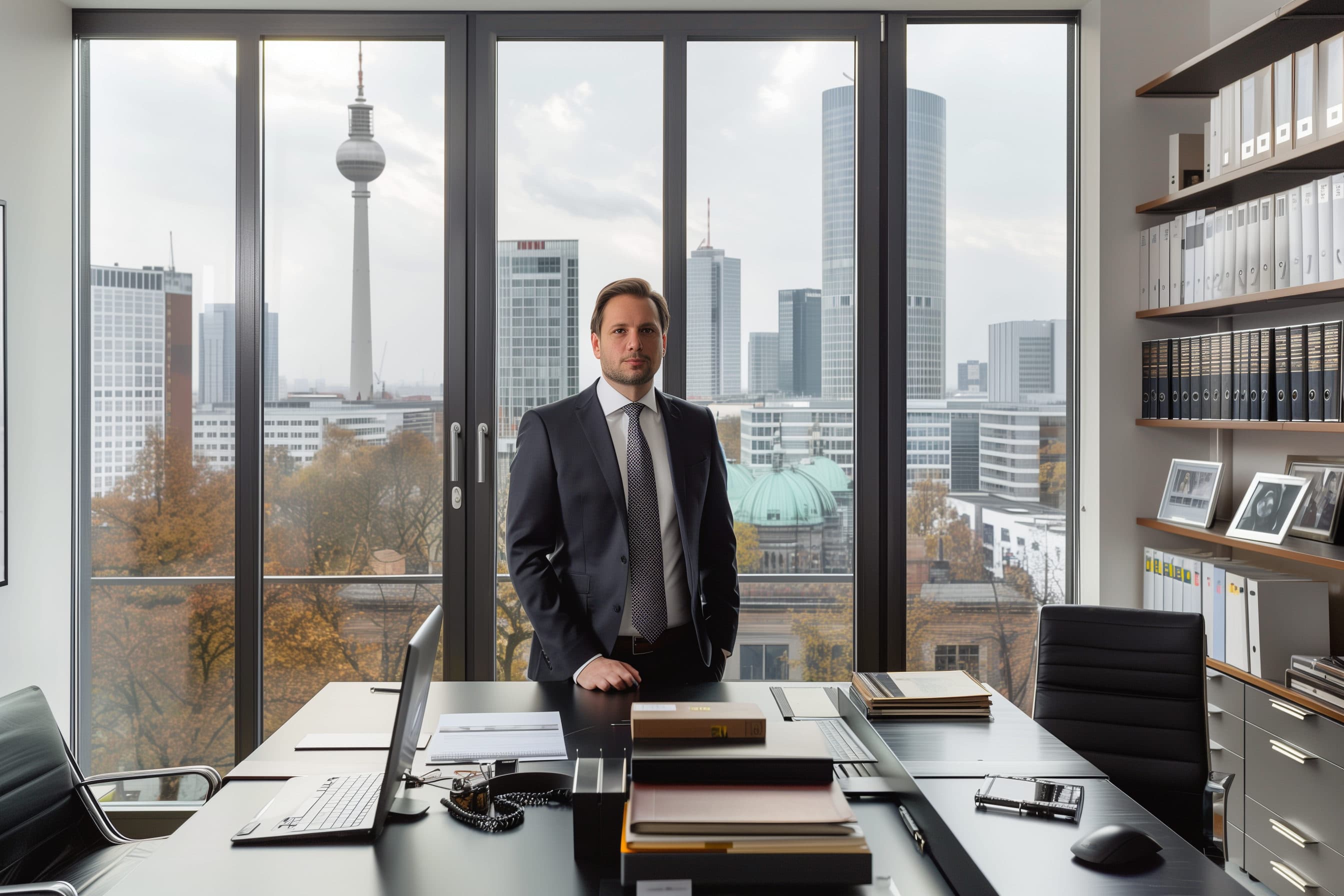
Les premiers pas d’un expatrié en Allemagne
30 min de lecture
Ce chapitre traite de l'ordre des démarches. Non pas de ce que vous devez faire en Allemagne, comme vous le constaterez sur toutes les listes disponibles en ligne, mais de l'ordre des étapes et des raisons pour lesquelles tant de ces listes se trompent. Vos premiers pas en Allemagne ne consistent pas en une série de tâches indépendantes que vous pouvez cocher dans l'ordre de votre choix. Certaines en bloquent réellement d'autres, d'autres seulement en apparence. Savoir les distinguer peut faire toute la différence entre un premier mois serein et huit semaines à courir d'un bureau à l'autre en attendant un document que vous ne pouvez pas encore avoir.
Vous trouverez ci-dessous le plan de cette section. Chaque tâche fait l'objet d'un chapitre détaillé, et ce chapitre ne reprend pas ces détails. Il présente plutôt les tâches dans l'ordre le plus logique, indique les délais réellement en vigueur et aborde ouvertement le fameux problème de la poule et de l'œuf. Ce problème est bien réel, mais moins important qu'on ne le croit. S'il prend autant d'ampleur, c'est en partie parce que les nouveaux arrivants sont incités à considérer les habitudes institutionnelles comme des lois immuables.
Un cadre de référence pour tout ce qui suit. L'administration allemande n'est pas un système unique. Elle se compose de plusieurs systèmes construits séparément, gérés par différents niveaux de gouvernement et reliés seulement par des points précis. L'état civil relève du droit municipal. L'immigration est une question de droit fédéral, administrée par les Länder. Les impôts sont fédéraux. L'assurance maladie est un système à part entière, autonome. Si vos premières semaines vous semblent décousues, c'est parce qu'elles le sont réellement. Personne ne coordonne les démarches pour vous, et aucun service n'a une vision globale de votre dossier. Une fois ce constat accepté, le déroulement des événements cessera de paraître arbitraire et prendra tout son sens.
Vos premiers pas en Allemagne commencent avant même de monter dans l'avion.
La décision la plus importante concernant votre arrivée en Allemagne se prend avant votre départ, et elle se prend au consulat ou pas du tout. L'obligation d'obtenir un visa et la possibilité de retirer votre titre de séjour après votre arrivée dépendent entièrement de votre nationalité. Une erreur à ce sujet est irrémédiable.
Il existe trois grandes situations. Les citoyens de l'Union européenne, de l'Espace économique européen et de la Suisse bénéficient de la libre circulation. Ils n'ont besoin ni de visa ni de titre de séjour et, en règle générale, n'ont aucun contact avec les services d'immigration. Les citoyens d'un petit nombre de pays bénéficiant d'un régime particulier peuvent entrer sans visa, même pour un long séjour, et faire leur demande de titre de séjour depuis l'Allemagne. Toute autre personne doit être munie du visa approprié dans son passeport avant d'embarquer. Le type de visa est important, car un visa délivré pour un motif donné ne se transforme pas automatiquement en titre de titre de séjour pour un autre motif, même en cas de changement de projet.
Il est important de nommer précisément ce groupe privilégié, car de nombreuses informations contradictoires circulent à son sujet. L'article 41 de l'ordonnance sur le séjour (Aufenthaltsverordnung) permet aux ressortissants d'Australie, d'Israël, du Japon, du Canada, de la République de Corée, de Nouvelle-Zélande, du Royaume-Uni et des États-Unis d'entrer en Allemagne sans visa, même pour un séjour de longue durée, et d'obtenir le titre de séjour requis sur place après leur arrivée. L'article 41(2) étend ce privilège aux ressortissants d'Andorre, du Brésil, du Salvador, du Honduras, de Monaco et de Saint-Marin, à condition qu'ils n'y exercent pas d'activité professionnelle. L'article 41(4) supprime ce privilège lorsqu'une demande de carte ICT est déposée. Si vous êtes titulaire de l'un de ces passeports, vous pouvez atterrir, vous enregistrer et faire votre demande directement en Allemagne, sans avoir à faire la queue au consulat à l'étranger.
La condition liée à ce privilège est souvent négligée. L'article 41(3) exige que la demande de titre de séjour soit déposée dans les quatre-vingt-dix jours suivant l'entrée sur le territoire. Quatre-vingt-dix jours à compter de la date d'arrivée, et non à compter du moment où l'on se sent installé, ni même à compter de la date à laquelle l'Ausländerbehörde propose un rendez-vous. Ce délai concerne le dépôt de la demande, et non l'obtention d'une décision ; une distinction essentielle que nous reprendrons plus loin, car il s'agit de l'information la plus importante de ce chapitre pour toute personne concernée.
Pour tous les autres, la première étape avant le départ consiste à déposer une demande de visa. Il est fortement conseillé de commencer les démarches bien plus tôt que nécessaire. Les délais d'attente pour un rendez-vous consulaire varient énormément selon le pays et la période de l'année, et vous n'avez aucun contrôle sur eux. Le portail officiel du gouvernement fédéral pour les travailleurs qualifiés, à l'adresse make-it-in-germany.com, détaille les modalités d'entrée et de séjour. L'Office fédéral des migrations et des réfugiés (BAMF) fait autorité en matière de titres de séjour et de conditions d'obtention. Privilégiez ces deux sources plutôt qu'un message sur un forum, car la réglementation en matière d'immigration a évolué à plusieurs reprises depuis 2023 et une réponse, même affirmative, datant d'il y a deux ans, pourrait décrire une règle désormais obsolète.
Deux documents méritent votre attention avant votre départ, car il est beaucoup plus difficile de les obtenir une fois en Allemagne. Le premier concerne tout document nécessitant une apostille ou une légalisation : actes de naissance, actes de mariage, jugements de divorce, relevés de notes. Obtenir un document auprès du service d'état civil de votre pays d'origine, sur place, ne prend qu'un après-midi. En revanche, l'obtenir en Allemagne prend des mois et nécessite souvent l'intervention d'un coursier et d'un traducteur assermenté. Le second document est une preuve de vos qualifications sous une forme lisible, car la reconnaissance des diplômes étrangers est une procédure distincte de l'immigration et possède ses propres délais.
Le visa n'est pas un permis et le Bürgeramt n'est pas un Ausländerbehörde
Deux confusions entraînent plus de rendez-vous inutiles que tout le reste réuni, et toutes deux consistent à confondre une chose avec une autre qui porte un nom similaire.
Premièrement : un visa n’est pas un titre de séjour. Le visa national, le visa D, autorise l’entrée en Allemagne et un séjour initial limité. Le titre de séjour, quant à lui, autorise à vivre en Allemagne et se présente généralement sous la forme d’un eAT (Elektronischer Aufenthaltstitel), une carte à puce de la taille d’une carte de crédit. Le visa est la porte d’entrée, le titre de séjour, le logement. À l’expiration du visa, vous devez déjà être titulaire du titre de séjour ou en avoir fait la demande. Cette démarche est distincte et s’effectue auprès d’un organisme spécifique, avec une file d’attente dédiée. Personne ne convertit automatiquement votre visa en titre de séjour, et un visa dont la date d’expiration est encore lointaine ne signifie pas que vous pouvez relâcher vos efforts.
La seconde source de confusion est plus coûteuse. Le Bürgeramt, l'état civil (parfois appelé Einwohnermeldeamt ou Bürgerbüro selon la ville), enregistre votre adresse. C'est tout. L'Ausländerbehörde, l'office des étrangers ou service de l'immigration, décide si vous êtes autorisé à séjourner en Allemagne et vous délivre votre titre de séjour. Ce sont des services différents, situés dans des bâtiments différents, soumis à des législations différentes, avec des systèmes de rendez-vous différents et, généralement, des délais d'attente très différents. Remplir votre Anmeldung, l'enregistrement obligatoire de votre adresse, n'entraîne aucune réservation, aucun déclenchement ni aucune accélération de vos démarches auprès de l'Ausländerbehörde. Aucun agent du Bürgeramt ne vérifie votre statut d'immigration lorsqu'il saisit votre adresse dans le registre. Notre chapitre sur enregistrement (Anmeldung) et documentation juridique passe en revue les deux bureaux en détail.
Le lien entre ces deux démarches est à sens unique. L'Ausländerbehörde exigera une preuve de votre adresse enregistrée dans le cadre de votre demande, c'est pourquoi l'Anmeldung est généralement la première étape. Cependant, vous devez prendre vous-même votre rendez-vous à l'immigration, et dans de nombreuses villes, l'attente est bien plus longue que pour l'enregistrement. Prenez rendez-vous la semaine de votre arrivée, avant même d'avoir réuni tous vos documents, car dans la plupart des villes, le rendez-vous est une ressource rare, contrairement aux formalités administratives. Vous pouvez rassembler vos documents pendant l'attente. Une fois vos documents réunis, vous ne pouvez plus obtenir de rendez-vous à la légère.
Voici un fait qui rend la situation supportable pour toute personne se prévalant du privilège de l'article 41, et qui est pourtant trop peu connu. L'article 81(3) de la loi sur le séjour (Aufenthaltsgesetz) prévoit que lorsqu'une personne séjournant légalement en Allemagne sans titre de séjour en fait la demande, son séjour est considéré comme autorisé jusqu'à ce que l'Office des étrangers (Ausländerbehörde) statue. L'article 81(5) exige que cet office vous délivre une Fiktionsbescheinigung, un certificat confirmant la validité juridique de votre demande. En clair : vous devez déposer votre demande dans un délai de quatre-vingt-dix jours. Une fois votre demande déposée, le retard accumulé par l'office relève de sa responsabilité et ne constitue pas une irrégularité dans votre statut légal. L'article 81(5a) va plus loin et précise que l'emploi décrit dans le futur titre de séjour est considéré comme autorisé dès le début de la procédure, l'autorisation étant mentionnée dans le certificat. Ainsi, la date limite à respecter est celle du dépôt de la demande, et un long délai de traitement ultérieur ne vous fera pas perdre votre statut légal.
Votre première semaine : Trouver un logement où vous pouvez vous enregistrer légalement
Presque tout, durant vos premiers mois, dépend d'une seule chose, et ce n'est pas un document. C'est une adresse que quelqu'un est disposé et en mesure de confirmer par écrit.
La raison est légale. L'article 19 de la loi fédérale sur l'enregistrement (Bundesmeldegesetz) oblige le bailleur social (Wohnungsgeber) à confirmer votre emménagement. Cette confirmation, appelée Wohnungsgeberbestätigung, est indispensable à votre inscription (Anmeldung). La loi précise les informations qu'elle contient : le nom et l'adresse du bailleur, le nom du propriétaire si le bailleur n'en est pas le propriétaire, la date d'emménagement, l'adresse du logement et les noms de toutes les personnes s'inscrivant. Elle précise également qui peut la délivrer : le bailleur lui-même ou une personne qu'il a mandatée. L'ancien locataire, votre employeur ou un ami chez qui vous dormez ne peuvent pas la signer, sauf s'il est bien le bailleur social de ce logement.
C’est pourquoi la question du logement est au cœur de vos premières semaines, et pourquoi il est important de lire notre chapitre sur le sujet. trouver un logement Avant votre vol, et non après. C'est pourquoi le type d'hébergement temporaire choisi est bien plus important que son prix. Un hôtel ne délivre pas d'attestation de logement (Wohnungsgeberbestätigung). De nombreuses plateformes de location de vacances interdisent à leurs hôtes d'en délivrer une. Un opérateur d'appartements meublés ou un propriétaire en sous-location en délivre souvent, et certains l'affichent même explicitement car ils savent que c'est ce dont leurs locataires ont besoin. Notre chapitre sur solutions de logement temporaire Ce document présente les différentes options. Lorsque vous comparez deux locations de courte durée, demandez laquelle vous fournira une confirmation écrite de votre emménagement et accordez plus d'importance à cette réponse qu'à la différence de loyer.
Il existe une limite à ne pas franchir, car elle est inscrite dans la loi elle-même. L'article 19(6) de la loi fédérale allemande sur l'enregistrement (Bundesmeldegesetz) interdit de fournir une adresse de domicile pour un enregistrement si la personne concernée n'y emménage pas, ni même n'envisage de le faire. Les services qui vous vendent une adresse d'enregistrement vous aident à commettre cette infraction, et la personne qui s'enregistre est exposée au même titre que celle qui vend l'adresse. S'enregistrer à son domicile actuel, même temporairement, et se réenregistrer en cas de déménagement, est parfaitement légal et constitue une pratique courante. S'enregistrer à une adresse où l'on ne réside pas n'est pas une solution de facilité ; c'est un risque qui peut impacter votre statut de résident.
Le délai de deux semaines et l'exemption de trois mois dont personne ne parle
L’article 17(1) de la loi fédérale allemande sur l’enregistrement des personnes (Bundesmeldegesetz) est clair : toute personne emménageant dans un logement doit s’enregistrer auprès du service d’enregistrement dans les deux semaines suivant son emménagement. Deux semaines à compter de la date d’emménagement, et non à compter de son arrivée sur le territoire ni de la date à laquelle le système de prise de rendez-vous daigne lui proposer un créneau.
La définition de logement est plus large qu'on ne le pense généralement. L'article 20 définit un « wohnung » comme tout espace clos utilisé pour y vivre ou y dormir. Une chambre dans un appartement partagé est un logement. Un appartement meublé avec services hôteliers est un logement. Une chambre d'hôtel, au sens strict, est un espace utilisé pour dormir. C'est précisément cette définition très large qui justifie l'existence d'une exception dans la loi.
L’article 27(2) répond à la question de l’obligation de s’enregistrer pour son logement Airbnb et est rarement mentionné dans les guides en anglais. Une personne déjà enregistrée en Allemagne qui loue un logement pour une durée maximale de six mois n’a besoin ni de s’enregistrer ni de se désenregistrer ; l’obligation ne s’applique que si elle n’a pas quitté les lieux au bout de six mois. La troisième phrase concerne tous les autres : pour les personnes résidant à l’étranger et non enregistrées en Allemagne au titre de l’article 17(1), cette obligation naît après trois mois.
Lisez attentivement les conditions avant de vous en prévaloir, car elles comportent une limite réelle. L'exemption est destinée aux personnes qui résident encore à l'étranger et se trouvent temporairement en Allemagne. Elle précise « sonst im Ausland wohnen », c'est-à-dire celles qui résident autrement à l'étranger. Si vous avez quitté votre domicile dans votre pays d'origine pour vous installer en Allemagne, vous occupez un logement au sens de l'article 17(1), et le délai de deux semaines court à compter de la date de votre installation dans votre domicile. L'exemption ne vous autorise pas à séjourner trois mois sans déclaration après votre émigration, et un agent du Bürgeramt ne l'interprétera pas ainsi. Son utilité réside dans le cas précis et fréquent d'une personne en mission de courte durée, qui possède toujours un domicile à l'étranger et à qui des collègues, pourtant bien intentionnés, font croire qu'elle est déjà en situation irrégulière après quatorze jours. Ce qui est généralement faux.
Pour le nouvel arrivant lambda, la démarche est simple et n'a rien à voir avec les amendes. Inscrivez-vous dès que vous avez trouvé un logement dont le bailleur confirmera votre emménagement, car l'inscription (Anmeldung) déclenche toutes les autres formalités. Chaque semaine de retard ajoute une semaine à toutes les étapes suivantes. Le délai est une obligation légale, mais la raison de se dépêcher est d'ordre pratique, et non punitif.
Une chose que vous n'avez pas à faire, et qui pose souvent problème aux personnes ayant déménagé en Allemagne : il n'y a pas d'obligation de radiation (Abmeldung) lors d'un déménagement à l'intérieur du pays. L'article 17(2) n'impose cette obligation qu'à une personne qui quitte son logement et ne s'installe pas dans un nouveau logement en Allemagne. Inscrivez-vous à votre nouvelle adresse et l'ancienne sera automatiquement radiée. L'obligation de radiation (Abmeldung) concerne les personnes qui quittent le pays.
Ne cherchez pas de raccourci en ligne pendant la première semaine.
L'Allemagne a mis en place un véritable service national d'enregistrement en ligne, appelé elektronische Wohnsitzanmeldung (enregistrement électronique de résidence), généralement abrégé en eWA. Ce service est fonctionnel et se déploie progressivement dans les Länder. Cependant, pour la plupart des lecteurs de ce chapitre, il est inaccessible durant les premières semaines.
Il y a deux raisons principales, et chacune suffit à elle seule. Le service ne couvre absolument pas les personnes venant de l'étranger (Zuzug aus dem Ausland). Son utilisation requiert la fonction d'identité électronique (Online-Ausweisfunktion), qui correspond en pratique à une carte d'identité allemande (Personalausweis) ou à une carte d'identité électronique européenne ; un passeport ne contient pas de puce électronique et ne peut donc pas être utilisé. Une troisième restriction s'adresse directement à ce public : le service n'est actuellement pas compatible avec un titre de séjour électronique (elektronischer Aufenthaltstitel). Par conséquent, même un ressortissant d'un pays tiers résidant déjà en Allemagne, titulaire d'une carte de séjour allemande et souhaitant simplement déménager dans la même ville, ne peut pas utiliser le service en ligne pour le moment.
Les instructions pratiques sont donc claires. Si vous venez d'arriver de l'étranger, prévoyez votre rendez-vous en personne et cessez de chercher à le contourner. Le temps passé à chercher un raccourci numérique est du temps perdu à consulter régulièrement le calendrier des rendez-vous, qui est pourtant essentiel pour votre inscription. Notre chapitre sur enregistrement (Anmeldung) et documentation juridique Ce document décrit le déploiement actuel et les restrictions exactes ; c'est l'endroit à consulter avant de conclure que la voie en ligne vous est ouverte.
La chaîne documentaire : ce qui arrive spontanément et ce que vous devez rechercher.
Après l'inscription, une série de numéros et de cartes sont émises. Comprendre lesquelles arrivent automatiquement et lesquelles nécessitent une intervention de votre part est ce qui fait la différence entre un premier mois serein et un premier mois angoissant.
Le Steueridentifikationsnummer, numéro d'identification fiscale généralement abrégé en Steuer-ID ou IdNr, vous est attribué automatiquement. Vous n'avez aucune démarche à effectuer. Le Bundeszentralamt für Steuern (Office central fédéral des impôts) vous l'attribue une fois que l'autorité compétente a transmis vos données (votre Anmeldung déclenche automatiquement cette procédure). Ce numéro à onze chiffres vous est ensuite envoyé par courrier à l'adresse que vous avez déclarée. Le délai d'acheminement n'est pas garanti. Prévoyez quelques semaines. Le BZSt vous offre une solution de repli : si vous n'avez rien reçu dans les trois mois suivant votre première inscription en Allemagne, vous pouvez en faire la demande via son portail en ligne ou par écrit. Ce numéro est permanent et reste valable même en cas de déménagement, de mariage ou de changement de nom. Il est différent du Steuernummer, délivré par votre Finanzamt (service des impôts allemand) pour une question fiscale spécifique, et n'est pas un numéro de TVA. Consultez notre chapitre sur Comprendre les impôts allemands explique comment les chiffres s'articulent.
Le numéro d'assurance sociale (Sozialversicherungsnummer) vous est également attribué, mais seulement une fois que vous avez un emploi. Il est délivré par la Deutsche Rentenversicherung, l'organisme public de sécurité sociale, et vous identifie auprès de l'ensemble du système de sécurité sociale pour le reste de votre vie active. Lorsque vous commencez votre premier emploi soumis aux cotisations sociales, votre employeur vous inscrit à la Krankenkasse, votre caisse d'assurance maladie. La Krankenkasse demande ensuite le numéro à l'organisme de sécurité sociale, et la confirmation vous est envoyée par courrier. Depuis 2023, ce document s'appelle la Versicherungsnummernachweis, qui a remplacé l'ancien Sozialversicherungsausweis. Si vous n'êtes pas encore employé, l'absence de ce numéro n'est pas un problème à régler. Il apparaîtra le moment venu. Notre chapitre sur le système de sécurité sociale explique à quoi ce numéro vous connecte.
La carte de santé électronique (eGK) est celle dont vous avez besoin. Elle est délivrée par votre caisse d'assurance maladie (Krankenkasse), et non par une autorité compétente, et n'existe qu'après votre inscription et la fourniture de votre photo. Votre inscription (Anmeldung) n'y contribue pas. C'est la carte que vous présentez à chaque consultation médicale. En attendant sa réception, votre cabinet médical vous demandera une attestation provisoire de votre caisse ou, dans certains cas, vous demandera d'avancer les frais et de vous faire rembourser. Notre chapitre sur le système de santé allemand Ce document explique comment l'utiliser et ce qui se passe si vous vous présentez sans lui.
Il est important de clarifier ce point, car cela évite bien des soucis inutiles. Numéro fiscal : automatique, soyez patient. Numéro de sécurité sociale : automatique une fois embauché, inutile de vous en occuper d'ici là. Carte d'assurance maladie : non automatique, faites les démarches nécessaires. Ces trois documents dépendent de la réception du courrier, ce qui nous amène à la tâche la moins attrayante, mais aussi la plus importante de votre première semaine : inscrivez votre nom lisiblement sur la boîte aux lettres. En Allemagne, le courrier est distribué au nom figurant sur la boîte, et non à un numéro d'appartement. L'absence de nom sur la boîte est la principale cause de disparition du courrier officiel. Si vous êtes sous-locataire, insistez pour que votre nom y soit ajouté. Un numéro d'identification fiscale (Steuer-ID) renvoyé à l'expéditeur parce que la boîte aux lettres portait le nom d'une autre personne vous fera perdre un temps précieux.
Le véritable réseau de dépendances derrière vos premiers pas en Allemagne
Voici l'objet de ce chapitre. Le fameux cercle vicieux de la poule et de l'œuf se présente ainsi : il faut une adresse pour l'inscription fiscale (Anmeldung), l'inscription fiscale pour obtenir le numéro d'identification fiscale (Steuer-ID), ce numéro d'identification fiscale pour ouvrir un compte bancaire, un compte bancaire pour louer un appartement, et un appartement pour avoir une adresse. Dit comme ça, le cercle est fermé, et cela désespère. En réalité, il n'est pas fermé du tout, car deux de ces cinq éléments sont illusoires.
Commençons par les liens officiels. Il est absolument impossible de s'inscrire sans une attestation de logement (Wohnungsgeberbestätigung) ; c'est stipulé à l'article 19 de la loi fédérale allemande sur l'enregistrement (Bundesmeldegesetz), et rien ne pourra y changer quoi que ce soit. De même, il est impossible d'obtenir un numéro d'identification fiscale (Steuer-ID) sans s'inscrire, car c'est l'autorité d'enregistrement qui transmet vos données qui déclenche l'attribution. Ces deux points sont inscrits dans la loi. Le reste du processus est plus souple qu'il n'y paraît.
Le lien avec le compte bancaire est celui qu'il convient le plus de déconstruire, car il est répété partout comme s'il s'agissait d'une loi, ce qui est faux. La législation fiscale allemande oblige certes une banque à enregistrer le numéro d'identification fiscale (Steuer-ID) de chaque titulaire de compte. Cependant, le Code fiscal (Abgabenordnung) prévoit que si vous ne l'avez pas fourni au début de la relation commerciale, la banque doit le demander à l'administration fiscale fédérale (Bundeszentralamt für Steuern) par une procédure automatisée, et ce jusqu'à la fin du troisième mois suivant l'ouverture du compte. La loi prévoit expressément la possibilité d'ouvrir un compte avant même de connaître le Steuer-ID et laisse à la banque la responsabilité de le rechercher. Ainsi, une banque qui vous indique ne pas pouvoir ouvrir votre compte faute de Steuer-ID exprime une préférence interne, et non une obligation légale. Cette préférence est autorisée pour un compte commercial classique, mais pas pour un compte de base (Basiskonto).
Voilà le deuxième maillon faible. Tout consommateur résidant légalement dans l'Union européenne a le droit légal à un Basiskonto, un compte de paiement de base, en vertu de la loi allemande sur les comptes bancaires (Zahlungskontengesetz). Les motifs de refus d'ouverture de compte par une banque sont strictement encadrés, et la solvabilité n'y figure pas. De même, un historique Schufa négatif, le chômage ou l'absence totale d'historique financier allemand n'en font pas partie. Point crucial, l'absence de domicile fixe n'est pas non plus un motif de refus : ce droit s'étend expressément aux personnes sans domicile fixe, ce qui est indispensable, car un droit excluant les sans-abri exclurait précisément les personnes auxquelles il est destiné. Notre chapitre sur ouvrir un compte bancaire en Allemagne Elle énumère la liste complète des refus et la procédure de réclamation gratuite auprès de la BaFin si une agence refuse malgré tout.
Encore une idée reçue qu'il est bon de déconstruire : votre IBAN étranger ne devrait pas poser problème. En vertu du règlement SEPA, un payeur ou un bénéficiaire de la zone euro ne peut exiger que le compte soit domicilié dans un pays particulier. Un propriétaire ou un employeur qui vous dit ne pas pouvoir gérer un IBAN non allemand décrit en réalité son propre logiciel, et non la loi.
Voici donc le schéma exact. Le logement, dont le fournisseur confirmera l'emménagement, est la véritable clé et le seul véritable goulot d'étranglement. L'Anmeldung (inscription au registre national) en dépend. Le Steuer-ID (numéro d'identification fiscale) dépend de l'Anmeldung et est délivré ensuite automatiquement. La demande de titre de séjour dépend de l'Anmeldung et, pour les personnes relevant de l'article 41, elle dispose de son propre délai de 90 jours, indépendant de la date d'entrée. L'assurance maladie est indépendante de ces documents et doit être souscrite immédiatement. L'ouverture d'un compte bancaire ne dépend ni du Steuer-ID ni, à proprement parler, de l'Anmeldung, même si la Meldebescheinigung (attestation d'inscription) facilite grandement les démarches administratives. Tout le reste, et il y a beaucoup de choses, en dépend.
Voici donc la procédure pratique qui convient à la plupart des gens : trouver un logement légal dont le propriétaire confirmera votre emménagement ; prendre rendez-vous à la mairie (Bürgeramt) et au bureau des étrangers (Ausländerbehörde) dès que vous avez une date d’emménagement, car les rendez-vous sont rares ; souscrire une assurance maladie en parallèle, car elle ne dépend d’aucun organisme ; vous inscrire ; attendre que votre numéro d’identification fiscale (Steuer-ID) vous soit envoyé ; ouvrir un compte avec l’attestation de résidence fiscale (Meldebescheinigung), ou avec une demande de compte de base (Basiskonto) si vous ne pouvez pas attendre ; remettre votre numéro d’identification fiscale (Steuer-ID) à votre employeur dès sa réception afin de ne pas être imposé au taux d’urgence ; et seulement ensuite, entamer les démarches administratives.
Les horloges qui fonctionnent réellement
Il est important de noter quatre échéances dans votre calendrier dès la première semaine. Tout le reste peut être organisé autour de celles-ci.
Quatorze jours après votre emménagement pour l'Anmeldung (enregistrement), conformément à l'article 17(1) de la Bundesmeldegesetz (loi fédérale allemande sur l'enregistrement). Quatre-vingt-dix jours après votre entrée sur le territoire allemand pour demander votre titre de séjour, si vous bénéficiez du privilège prévu à l'article 41 ; veuillez noter que ce délai concerne le dépôt de votre demande et non la décision finale. Un mois à compter de la date d'entrée en vigueur de votre obligation d'assurance, si vous êtes soumis à l'obligation d'assurance privée : l'article 193(3) de la Versicherungsvertragsgesetz (loi allemande sur l'assurance maladie) impose à toute personne résidant en Allemagne de souscrire une assurance maladie auprès d'un assureur agréé en Allemagne, et l'article 193(4) prévoit une majoration de prime équivalente à une prime mensuelle par mois supplémentaire entamé si vous déposez votre demande plus d'un mois après la date d'entrée en vigueur de l'obligation. Enfin, la date d'expiration de votre visa, qui ne constitue pas une date limite de décision, mais une date limite de dépôt de votre demande.
Deux de ces points méritent d'être soulignés. L'obligation d'assurance maladie est véritablement universelle et s'applique dès la résidence, et non à l'inscription, à l'emploi ou aux formalités administratives. L'article 5(1), point 13 du cinquième Code social étend l'assurance maladie obligatoire à toute personne ne bénéficiant d'aucune autre couverture en cas de maladie, et l'article 193(3) de la loi sur l'assurance maladie (Versicherungsvertragsgesetz) concerne tous les autres. Il n'existe aucune lacune légale lorsque vous résidez en Allemagne et n'êtes tout simplement pas assuré. C'est pourquoi l'assurance maladie devrait figurer parmi vos priorités : elle est indépendante des autres démarches, elle est de toute façon une condition standard pour l'obtention du titre de séjour, et son échéance commence à courir, que vous en soyez conscient ou non. Notre chapitre sur Les essentiels de l'assurance en Allemagne Ce chapitre aborde ce qui est obligatoire et ce qui est simplement judicieux, et le choix entre la couverture légale et la couverture privée est présenté dans notre chapitre sur assurance maladie publique vs privéeCe choix est beaucoup plus difficile à annuler qu'il n'y paraît, alors lisez-le avant de signer plutôt qu'après.
L'autre problème, c'est la règle des 90 jours, car elle échoue discrètement. Personne ne vous envoie de rappel. Aucune lettre. Vous découvrez simplement, au 110e jour, que le rendez-vous que vous attendiez patiemment était censé être précédé d'une demande que vous n'avez jamais déposée. Si vous êtes dans ce cas, renseignez-vous cette semaine sur la façon dont votre ville traite les demandes. Certaines acceptent une demande écrite par la poste ou via un portail qui suspend le délai, le rendez-vous pour la prise de données biométriques étant fixé ultérieurement. Cette distinction entre le dépôt et le rendez-vous est précisément celle sur laquelle repose l'article 81(3), et c'est ce qui explique la viabilité de la règle.
Ce qui semble urgent mais ne l'est pas
Une liste tout aussi utile est celle des choses que les nouveaux arrivants s'empressent de faire alors qu'il n'est pas nécessaire de les faire en urgence, car s'y attarder coûte du temps aux véritables échéances.
L'électricité et internet ne sont pas des choses à faire dès la première semaine. L'électricité, en particulier, bénéficie d'une protection légale souvent méconnue : si vous emménagez et ne faites aucune démarche, vous êtes automatiquement fourni par le Grundversorger, le fournisseur d'électricité de base, et vous pouvez ensuite changer pour un contrat moins cher avec un préavis court. Personne ne se retrouve sans électricité parce qu'il n'a pas signé de contrat le troisième jour. Pour internet, c'est différent : il ne faut pas précipiter les choses, car les délais d'installation dans certaines villes peuvent atteindre plusieurs semaines, quelle que soit la date de la commande. Il est donc conseillé de commander tôt, mais de ne pas s'inquiéter outre mesure d'un délai plus long. Notre chapitre sur configuration des utilitaires Ce document explique ce qui est inclus dans votre loyer, ce qui ne l'est pas, ainsi que la lettre de contribution à la radio (Rundfunkbeitrag) qui vous parviendra automatiquement après votre inscription (Anmeldung), que vous possédiez ou non un téléviseur.
La conversion de votre permis de conduire n'est pas urgente pour la plupart des gens, car les permis étrangers de nombreux pays restent valides pendant une période initiale après votre installation dans le pays de résidence, et la procédure de conversion a ses propres règles et délais. Ne consacrez pas la deuxième semaine à cela. Notre chapitre sur conduire en Allemagne Nous abordons également la question des horaires. Les transports en commun, c'est aussi quelque chose que vous pouvez découvrir au fur et à mesure plutôt qu'à l'avance ; vous n'avez pas besoin d'abonnement dès le premier jour, et notre chapitre sur les bases des transports en commun Cela explique les systèmes tarifaires une fois que vous avez une raison de vous y intéresser. Un relevé Schufa ne peut pas non plus être précipité, car il est établi à partir d'un historique financier allemand que vous ne possédez pas encore, et aucune anxiété ne peut l'accélérer. Les propriétaires qui insistent sur un relevé ne sont pas en droit de refuser un Basiskonto sur cette base, et notre chapitre sur crédit et prêts en Allemagne explique ce qu'est une lime fine et comment elle s'épaissit.
L'apprentissage des langues fait également partie de cette catégorie, mais pour une raison différente. Il n'est pas urgent la première semaine, alors qu'il s'agit de la chose la plus importante que vous ferez en première année. Ne confondez pas les deux. Notre chapitre sur évaluation de votre niveau d'allemand constitue un point de départ judicieux une fois les formalités administratives réglées, et notre chapitre sur adaptation culturelle initiale Cela concerne les règles non écrites dont aucun bureau ne vous parlera.
Deuxième mois et au-delà : La deuxième vague
Une fois inscrit, assuré et cotisé, une deuxième vague de tâches arrive, plus calme car aucune n'est soumise à une échéance légale.
Votre numéro d'identification fiscale (Steuer-ID) est transmis au service de paie de votre employeur dès sa réception. En attendant, vous serez probablement imposé en Steuerklasse VI, la catégorie d'imposition d'urgence avec les prélèvements les plus importants. Bien que le trop-perçu vous soit remboursé ultérieurement lors de votre déclaration annuelle, ce remboursement aura lieu l'année suivante. Il s'agit de la tâche la plus importante (cinq minutes seulement) de vos premiers mois, et pourtant, on l'oublie souvent car personne ne nous le réclame.
Viennent ensuite les démarches qui n'ont jamais été bloquées, mais seulement reportées : l'assurance responsabilité civile (Haftpflichtversicherung), qui n'est pas obligatoire et que presque tous les ménages possèdent déjà, la responsabilité étant illimitée en Allemagne ; l'assurance habitation (Hausratversicherung) si vous possédez des biens assurables ; et l'opportunité d'adhérer au régime de retraite de votre employeur. Si vous avez d'abord emménagé dans un logement temporaire, le transfert à votre adresse définitive (Ummeldung) intervient maintenant. N'oubliez pas qu'il s'agit d'une inscription à la nouvelle adresse, et non d'une radiation de l'ancienne.
C’est à ce moment précis que les conseils généraux cessent d’être utiles et que votre situation particulière prend tout son sens. Le deuxième mois d’un travailleur indépendant est totalement différent de celui d’un salarié. Une famille avec des enfants scolarisés doit gérer des démarches spécifiques. Un étudiant est soumis à des règles d’assurance et possède un permis de travail différents. Les chapitres listés à la fin de cette page sont organisés de manière à ce que vous puissiez accéder directement à ceux qui vous concernent et ignorer les autres.
Outils pour préparer les documents
Werkzeu.ge est une suite d'outils en ligne pour les démarches administratives en Allemagne, développée par Cryon UG, la société à l'origine de WeLiveIn.de. Il est pertinent de la mentionner ici car plusieurs de ses outils répondent directement aux problématiques de séquençage décrites dans ce chapitre. Deux points importants à préciser avant toute chose : Werkzeu.ge prépare et génère des documents ; elle ne les soumet jamais à aucune autorité. Il n'y a aucune intégration avec le Bürgeramt, l'Ausländerbehörde ni le Finanzamt. Vous devrez toujours vous présenter en personne à votre rendez-vous, muni de documents papier, comme tout le monde. Enfin, Werkzeu.ge est en version bêta jusqu'au 30 novembre 2026, et ses conditions d'utilisation précisent que les outils peuvent être incomplets ou contenir des bogues. Il convient donc de considérer les documents générés comme une ébauche soignée plutôt que comme une vérité absolue.
Pour la question de savoir quel titre vous concerne avant votre départ, le Aufenthaltstitel-Checker il passe en revue les catégories de titres de propriété résidentielle, et le Vérificateur de carte bleue Il en va de même pour la procédure relative à la Carte bleue européenne. Ces deux services sont accessibles gratuitement et sans compte, dans la catégorie « Gast ». Ce sont des outils d'orientation, non des outils de décision : l'Agence allemande pour l'immigration et les migrations (BAMF) et le portail « Make It in Germany » sont les autorités compétentes, et votre office des étrangers (Ausländerbehörde) a le dernier mot concernant votre dossier.
Pour ce qui est des formalités administratives elles-mêmes, Formule C'est l'élément le plus important pour un nouvel utilisateur. Il s'agit d'une bibliothèque consultable de formulaires officiels fédéraux, étatiques et municipaux, chacun comportant un lien vers la source, une date de récupération, un statut et une somme de contrôle. Les formulaires sont préremplis dans le navigateur et vos saisies restent sur votre appareil. Les lacunes sont documentées lorsqu'un formulaire est manquant, et non pas simplement une omission silencieuse. C'est un service gratuit, sans compte. Parallèlement, le Amtsprofil Amtsprofil préremplit les informations que vous auriez autrement à ressaisir sur chaque formulaire pendant un an. Ce service est gratuit, mais nécessite un compte gratuit car il a des données à stocker.
Pour le compte bancaire, le Liste de contrôle des comptes bancaires Ce document indique ce qu'il faut apporter et précise qu'il s'agit d'un tarif Gast. Pour comprendre ce qu'est réellement l'identifiant de paie (Steuer-ID) avant que le service de la paie ne vous le demande, Système de contrôle 101 est également de niveau Gast. Anmeldung/Ummeldung/Abmeldung Cet outil décrit plus en détail la procédure d'inscription et, contrairement aux autres outils mentionnés ici, il fait partie de la version payante Plus ; il faudra donc prévoir un paiement.
Trois mises en garde importantes. La version gratuite contient de la publicité. Les niveaux et les fonctionnalités peuvent évoluer pendant la phase bêta ; consultez donc les tarifs actuels sur werkzeu.ge/en/pricing Il est déconseillé de se fier aux chiffres cités dans un article, y compris celui-ci. Ces informations ne constituent en aucun cas un avis juridique, fiscal ou financier ; les conditions d’utilisation de la plateforme le précisent, et ce chapitre ne constitue pas non plus un conseil. Il décrit le fonctionnement général des bureaux. Votre situation peut être particulière, et si votre statut de résident est en jeu, il est judicieux de consulter un avocat spécialisé en immigration ou un centre de conseil agréé.
Que faire ensuite
Si vous n'êtes pas encore parti, le plus important est de préparer votre départ. Déterminez votre situation en matière de nationalité (parmi les trois catégories disponibles). Si vous êtes concerné par l'article 41, notez « Déposer votre demande avant le [date] » quatre-vingt-dix jours après votre date d'arrivée prévue, à un endroit où vous pourrez facilement le voir. Rassemblez tous les documents susceptibles de nécessiter une apostille pendant que vous êtes encore dans le pays qui les délivre. Si vous avez besoin d'un visa, entamez les démarches pour obtenir un rendez-vous plus tôt que vous ne le jugez raisonnable.
Si vous avez déjà atterri, faites ces quatre choses cette semaine et laissez le reste pour plus tard. Demandez par écrit à votre hébergeur s'il peut vous fournir une attestation de logement (Wohnungsgeberbestätigung). Si la réponse est négative, commencez à chercher un autre logement qui le fera, car ce document est indispensable pour toutes les démarches. Prenez rendez-vous au Bürgeramt (service des bourgmestres) et, séparément, au service des étrangers (Ausländerbehörde), sans attendre que tous vos documents soient complets. Souscrivez à une assurance maladie, car elle est indépendante et son délai d'activation est déjà en cours. Et mettez votre nom sur la boîte aux lettres, car tous les documents de cette procédure vous parviendront par courrier.
Lisez ensuite le chapitre correspondant à l'étape où vous vous trouvez. La procédure d'inscription complète est décrite dans notre chapitre sur… enregistrement (Anmeldung) et documentation juridiqueLe compte rendu, incluant le droit de Basiskonto et la marche à suivre en cas de refus d'une succursale, figure dans notre chapitre sur ouvrir un compte bancaire en AllemagneCe qu'il est obligatoire d'assurer et ce qui est simplement judicieux est abordé dans notre chapitre sur Les essentiels de l'assurance en AllemagneEt le marché du logement, qui est la partie la plus difficile de tout cela et celle pour laquelle personne ne peut vous épargner de raccourcis, est abordé dans notre chapitre sur trouver un logement.
Un dernier point important concerne les attentes. Vos premières semaines en Allemagne seront ponctuées de files d'attente, de formulaires rédigés dans une langue que vous ne maîtrisez peut-être pas encore, et d'au moins un employé qui vous donnera une information contradictoire avec celle du précédent. Ne vous inquiétez pas, cela ne signifie pas que vous vous y prenez mal. Cela indique simplement que vous devez jongler avec plusieurs systèmes distincts, ce qui est typique de l'administration allemande. Tout l'avantage réside dans la capacité à comprendre quel mécanisme bloque quel autre processus, et si vous avez lu jusqu'ici, vous l'avez désormais compris.
Références
Les informations contenues dans ce chapitre proviennent des sources et publications officielles énumérées ci-dessous, dont la dernière révision date de juillet 2026. Il s'agit de conseils généraux et non de conseils juridiques, fiscaux ou médicaux personnalisés.
Cet article a été traduit de l'anglais.